

2026.10.02
Actual Budget: Keep Control of Your Personal Finance Data
Actual Budget is an open-source, local-first personal finance tool built around envelope budgeting, transaction tracking, synchronization, and self-hosting options.
What it does
Actual Budget is designed for personal and household finance management. Its central model is envelope budgeting: you budget money you already have rather than relying on idealized income figures. That makes it a practical fit for people who want a structured way to assign spending, review transactions, and understand where their money goes.
The project follows a local-first approach. It can synchronize changes across devices, and the official website describes optional end-to-end encryption. This model may appeal to users who want more control over their financial data than a purely hosted service provides. However, local-first does not remove operational responsibilities. A self-hosted deployment still requires careful handling of backups, credentials, access control, synchronization, and recovery procedures.
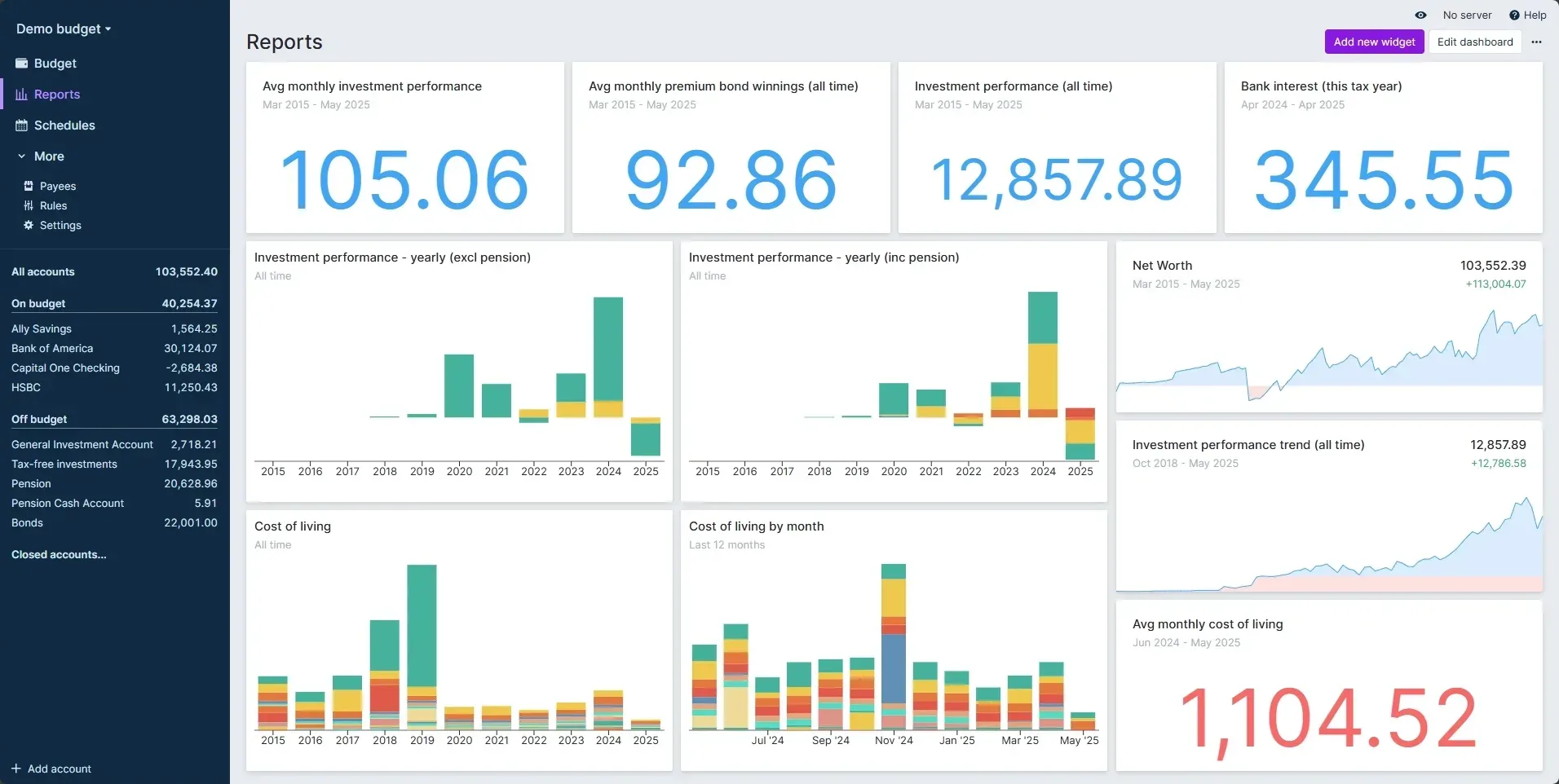
Image source: actual. Published by the project; the interface may vary by version.
Known features
Actual can bring accounts together and supports categorized transactions, split transactions, transfers, undo, and redo. Its listed reports include net worth and cash flow, while the website also describes a custom report engine. Transaction data can be imported from QIF, OFX, QFX, CAMT.053, and CSV files. Built-in importers for YNAB4 and nYNAB are also listed, which may help users migrating from those budgeting workflows.
For automated bank data, the official site lists goCardless for the EU and UK, and SimpleFIN for the US and Canada. These regional details should be checked before adoption: the available sources do not establish that every bank is supported, nor do they confirm pricing, refresh intervals, or availability for a particular account.
Developers can use the API to build custom importers or other features. The project also lists dark mode and dynamic theming based on system settings. The repository README identifies NodeJS as the implementation environment and points to community documentation and contribution resources.
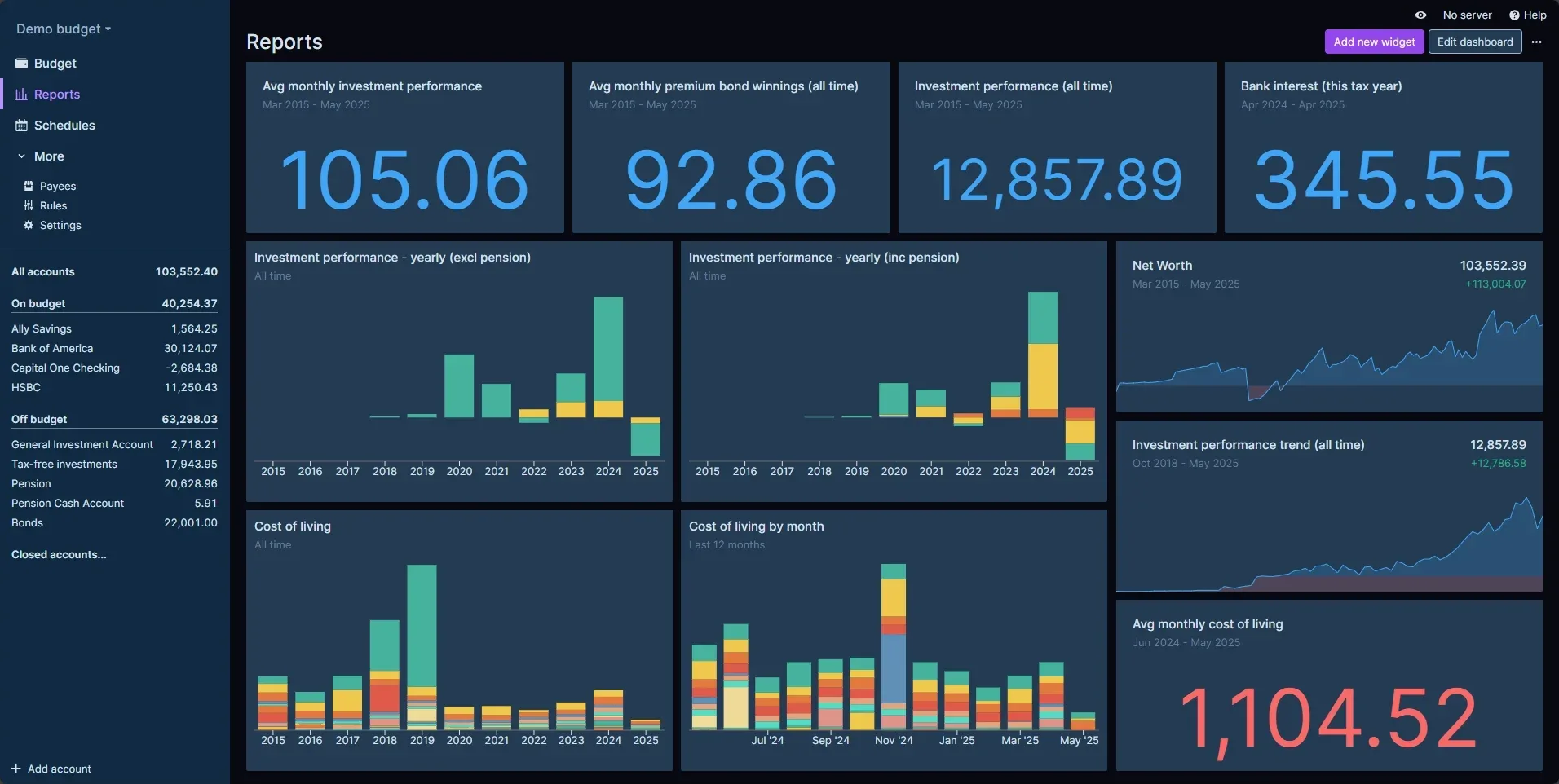
Image source: actual. Published by the project; the interface may vary by version.
Who it suits
Actual Budget is a reasonable candidate for individuals and households willing to use envelope budgeting and wanting greater control over their finance data. It may also suit technically comfortable users who want to run the synchronization service themselves. Developers and users with unusual import requirements may benefit from the API and extensibility options.
If you want an app that requires no server, backup, or synchronization maintenance, a hosted option or a local desktop installation may be easier than self-hosting. The README lists Docker, Windows, Mac, and Linux desktop apps, as well as third-party hosting paths.
Limitations and deployment considerations
Bank synchronization is not presented as globally available. The sources confirm only the listed providers and regions, so users elsewhere may need manual imports. With self-hosting, you remain responsible for updates, backups, network exposure, and restoring service. The MIT license describes the code’s licensing terms; it does not solve access-control or privacy-management requirements for financial records.
The official release page lists v26.9.0, published on September 1, 2026. This article does not infer compatibility, performance, or upgrade safety from that release entry. Before deployment, review the documentation for the relevant version and verify storage, encryption, synchronization, and migration procedures. Then choose between Docker, a desktop app, or a hosted route based on your operational capacity.
Sources
Sources checked: 2026-10-02