

2026.10.04
Carbon: An Open-Source ERP, MES, and QMS for Manufacturing
Carbon brings manufacturing planning, shop-floor execution, quality, inventory, and traceability into one Postgres-backed system, with self-hosting options.
What the project is for
Carbon is an open-source manufacturing system that combines ERP, MRP, MES, and QMS in one data model. Its project documentation describes coverage for quoting, material planning, inventory, shop-floor execution, quality management, and lot or serial traceability. The central idea is to let engineering, planning, production, quality, and accounting work from shared records instead of synchronizing several separate product databases.
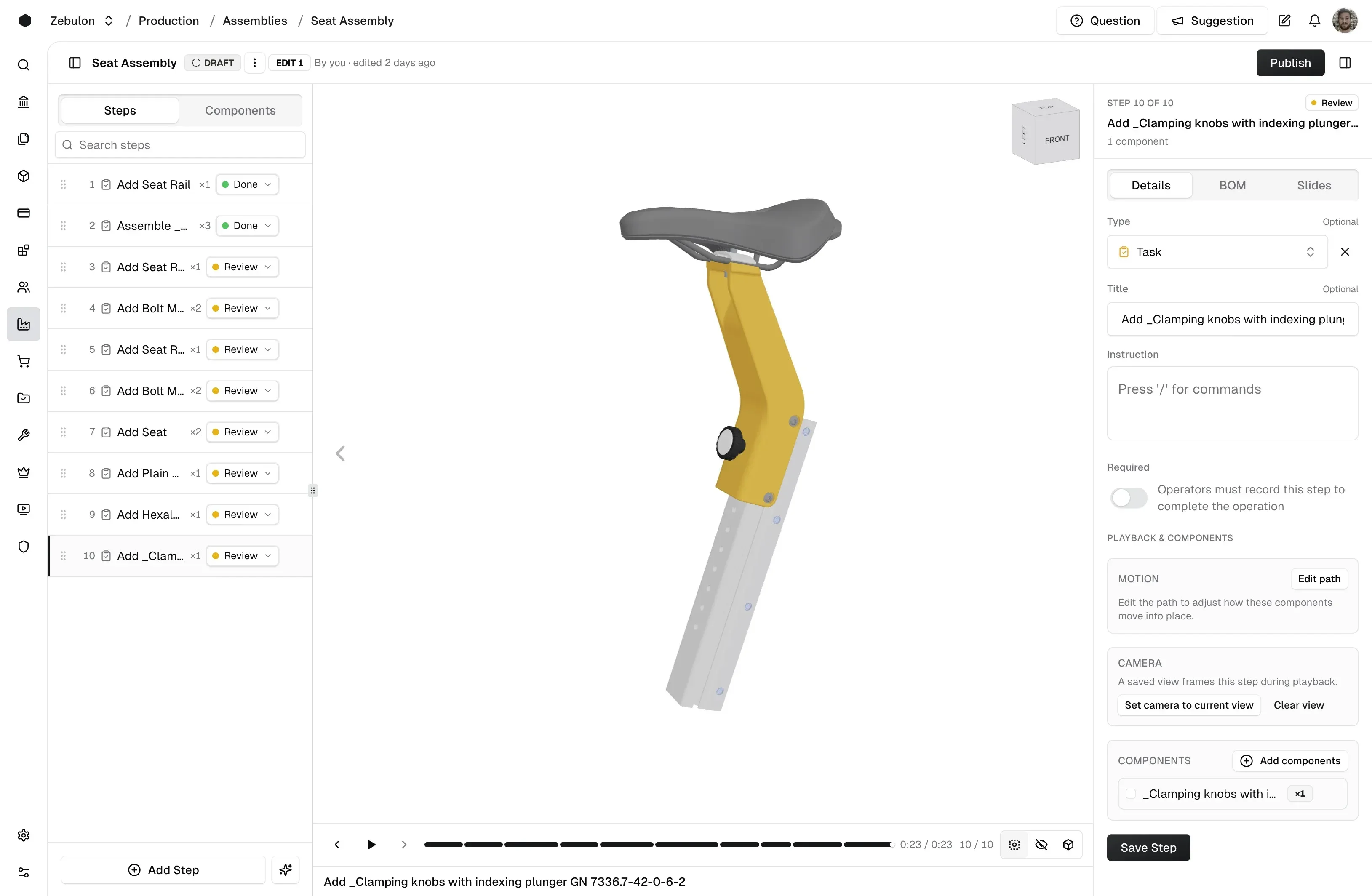
Image source: carbon. Published by the project; the interface may vary by version.
Who should consider it
Carbon is aimed at teams with real manufacturing workflows that need orders, materials, routings, production records, and quality records to remain connected. The README specifically mentions complex assembly, contract manufacturing, configure-to-order, and high-mix, low-volume production. Manufacturers moving away from spreadsheets or disconnected systems, especially those managing versioned BOMs and routings, may find it worth evaluating.
It may also suit technical teams that want deployment control. The project says it can run in a cloud service, a company VPC, on premises, or in an air-gapped environment. REST APIs, webhooks, and an MCP server provide ways to connect manufacturing operations with existing applications or permission-scoped automation.
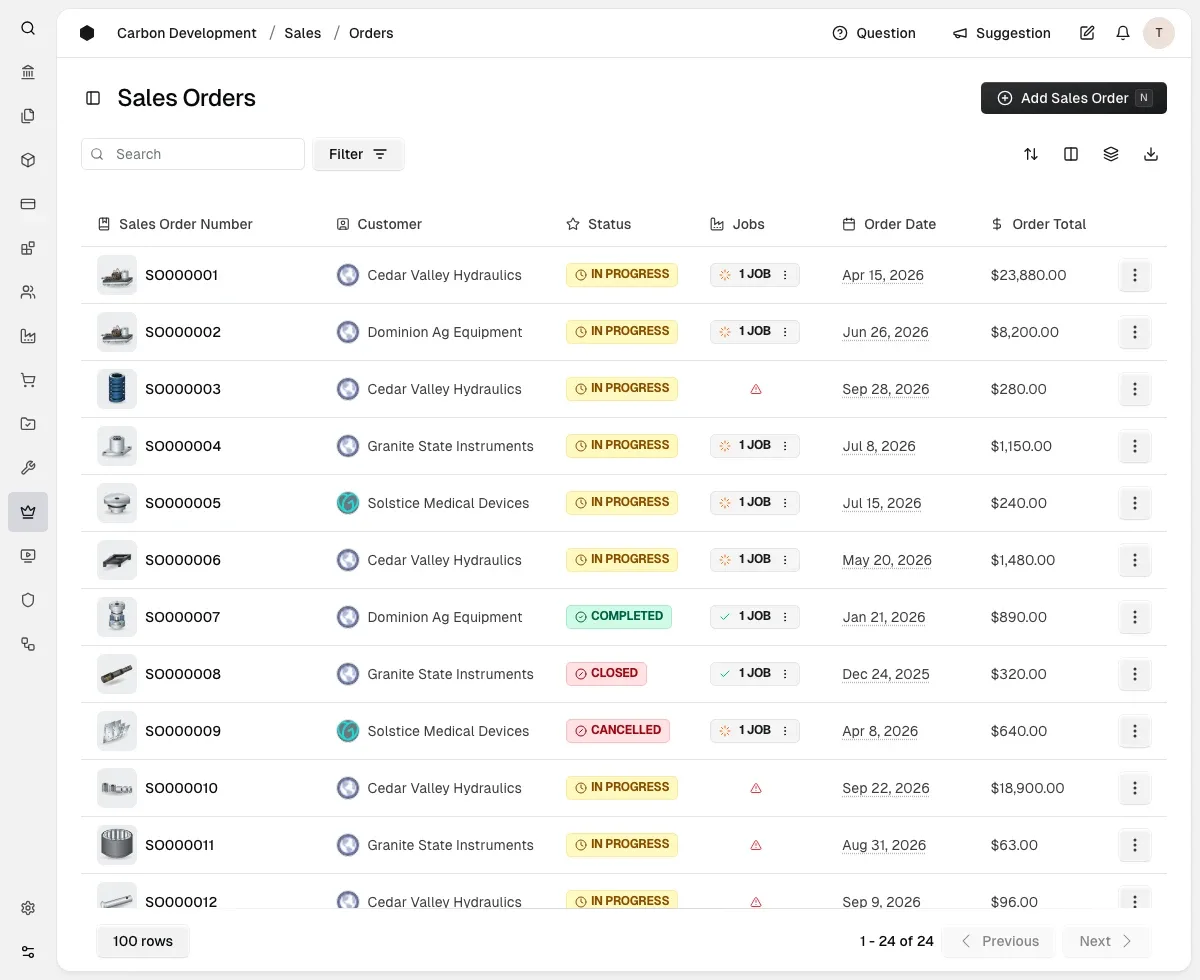
Image source: carbon. Published by the project; the interface may vary by version.
Documented capabilities
The business area includes quotes, sales orders, purchasing, inventory, invoicing, and actual job costs. Planning features include demand and supply planning, versioned BOMs, routings, and finite-capacity scheduling. Shop-floor functions include digital travelers, operator terminals, 3D instructions, barcode capture, and labor capture. Quality functions listed by the project include inspections, first article inspection, nonconformance, CAPA, calibration, and risk management.
Traceability is a major part of the feature set. Carbon supports forward and backward lot and serial genealogy. Engineering capabilities include multi-level BOMs, revisions, change orders, supersession, and product configuration. The README also lists general ledger, journals, multi-entity and multi-currency support, workflows, maintenance and assets, custom fields, and integrations with tools such as Onshape, SolidWorks, Paperless Parts, Jira, Slack, Stripe, and Zebra.
Technically, the project uses Postgres and describes row-level security, tenant-scoped records, role- and attribute-based access, and shared identity and permissions across the application, API, and MCP server. The repository includes React and TypeScript applications, a MES application, and Rust geometry services.
Limitations and deployment questions
The supplied materials do not confirm a specific version, minimum hardware requirements, a complete compatibility matrix, or performance figures. Those omissions mean teams should not infer factory scale or throughput from the feature list. A self-hosting team will need to assess the database, background jobs, cache, files, printing, email, authentication, and backup dependencies, as well as service connectivity in an isolated network.
Licensing requires particular attention. Repository metadata identifies the license as “Other” with an SPDX value of “NOASSERTION,” so the exact grant is not confirmed in the supplied sources. The README also states that API and MCP use in a self-hosted deployment requires a commercial license. Before production use, redistribution, commercial integration, or enabling particular interfaces, obtain clarification from the project about the applicable license and feature entitlements.
Finally, a listed feature is not the same as a validated implementation for every organization. A practical evaluation should use real BOMs, revision changes, genealogy queries, quality events, and shop-floor workflows. Teams should also verify accounting, identity and access rules, printers, and existing CAD or business-system integrations. This article is based on project materials and does not claim hands-on deployment or performance testing.
Sources
Sources checked: 2026-10-04