

2026.09.13
ccLoad: One Manageable Gateway for Multiple AI API Upstreams
ccLoad targets teams managing Claude Code, Codex, Gemini, and OpenAI-compatible upstreams with routing, failover, protocol handling, monitoring, and cost controls. Review configuration and governance needs before adoption.
What it is for
ccLoad is an open-source AI API gateway intended to consolidate multiple upstream services behind one stable entry point. It targets Claude Code, Codex, Gemini, and OpenAI-compatible clients, reducing the need to maintain separate key, channel, URL, and retry logic in every client script. The repository metadata identifies the project as active rather than archived and lists the MIT License. The official release page lists v4.10.2.
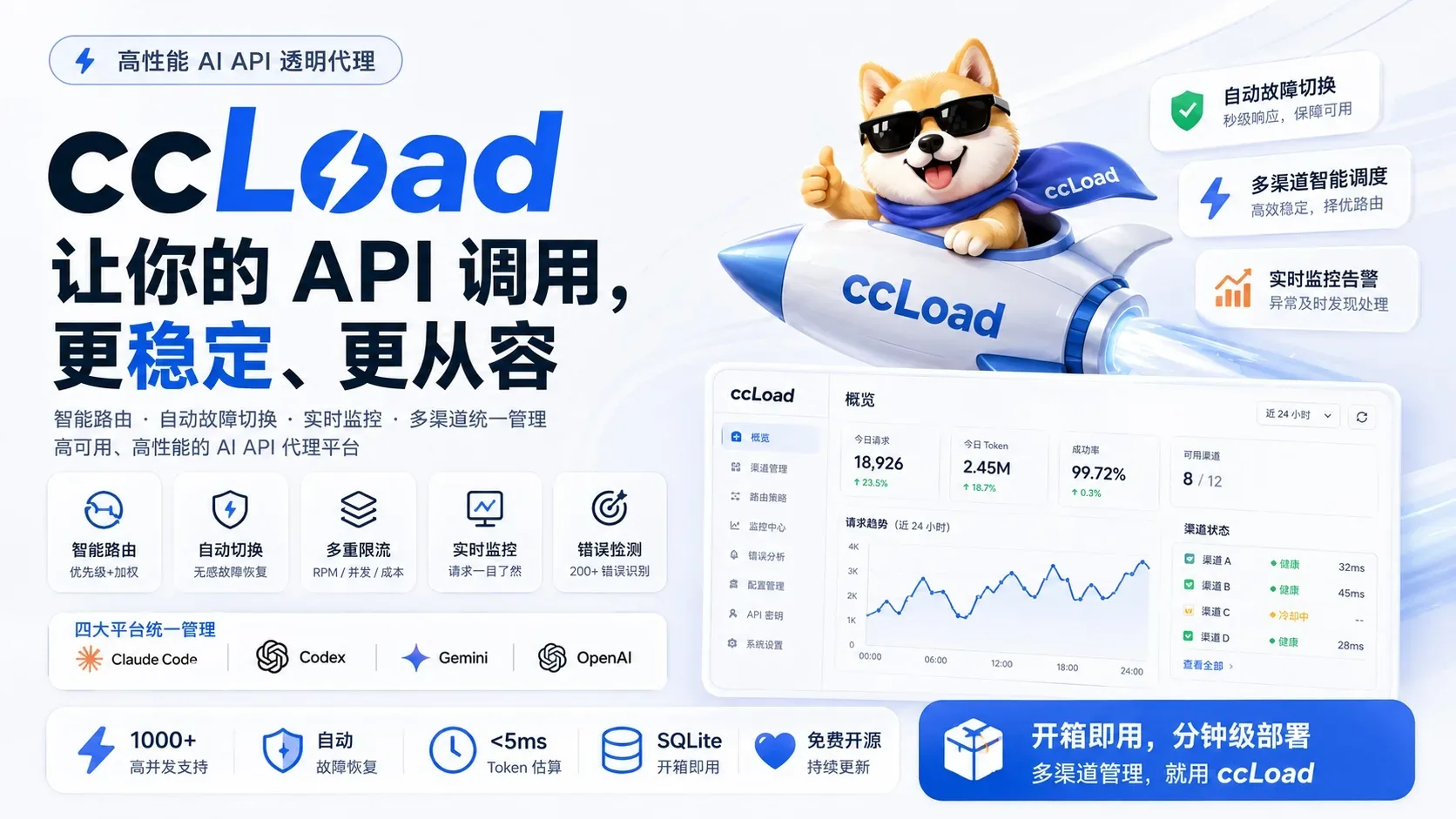
Image source: ccLoad. Published by the project; the interface may vary by version.
Known capabilities
Routing selects channels by priority and uses smooth weighted round-robin among channels with the same priority. When an upstream fails, ccLoad can skip keys, models, channels, or URLs according to the classified failure scope. Model-level cooldown is a central design: the README describes handling for 5xx responses, key-level 429 rate limits, model-unavailable 404 responses, model-retirement 410 responses, and structured cooldown responses. A specific model is cooled first; the scope expands to the channel only after all configured models or enabled keys are cooling.
A channel can contain multiple upstream URLs, with selection informed by observed latency and health. URLs may declare support for Anthropic, Codex, OpenAI, or Gemini protocols, and the project also provides protocol transformation. The dashboard can expose active requests, logs, token usage, time to first byte, cost, and upstream details. The README further says that HTTP 200 responses containing actual error content can enter the same failover path as ordinary upstream failures.
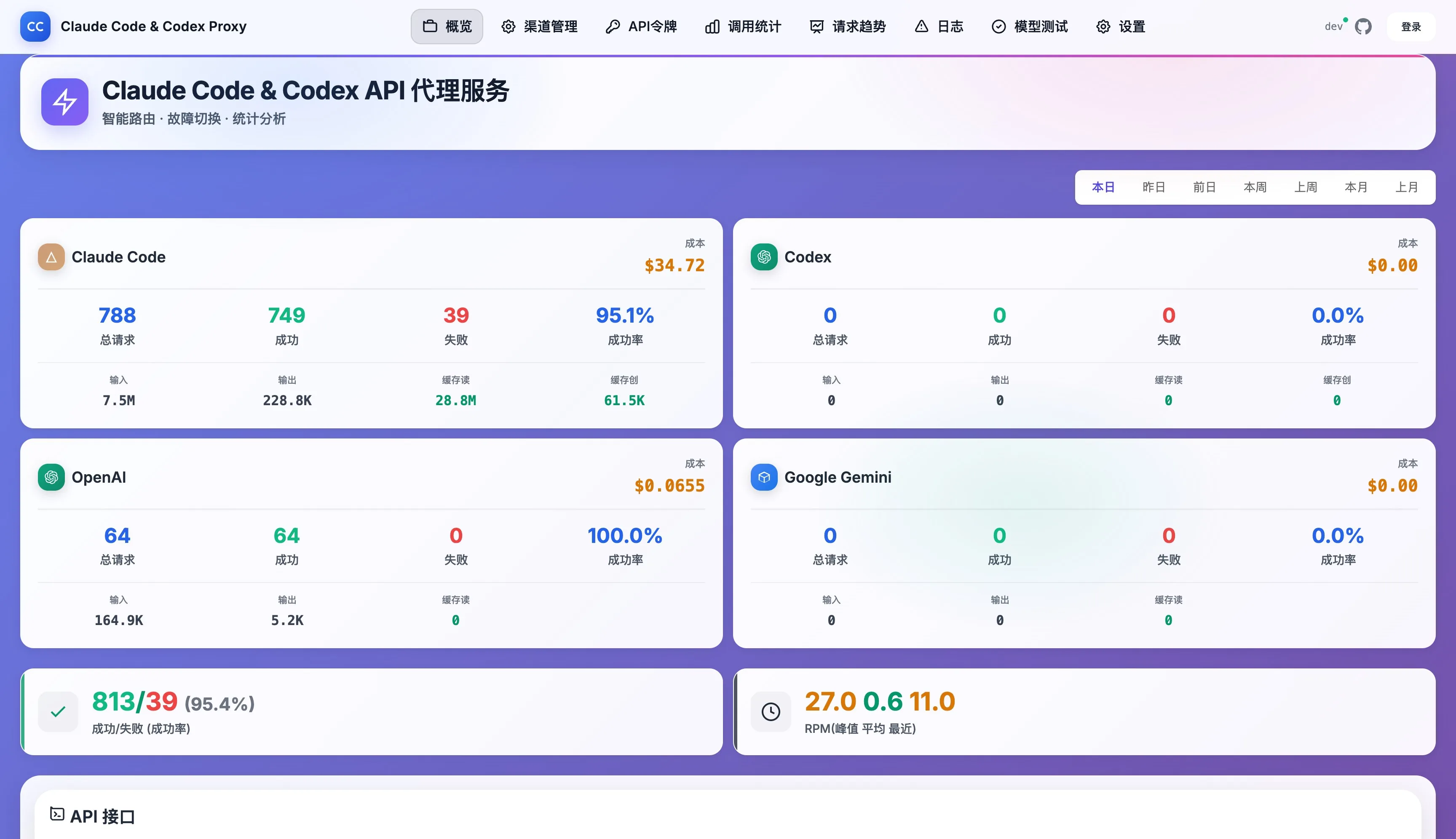
Image source: ccLoad. Published by the project; the interface may vary by version.
Who may benefit
ccLoad is aimed at individual developers, small teams, and platform operators running several AI API channels. It may be useful when clients need one gateway endpoint, operators want to reduce manual switching, or a team needs centralized request and usage visibility. Teams with multiple protocol clients, relay URLs, or model-specific entitlements may also benefit from its model and URL configuration options.
Limitations before adoption
ccLoad does not remove upstream quotas, authentication requirements, availability problems, or billing rules. Routing and soft-error detection depend on upstream response behavior; provider-specific error formats, streaming events, and protocol implementations still require validation. The supplied sources do not confirm a complete compatibility matrix, minimum hardware requirements, performance benchmarks, or a security audit, so those conclusions should not be inferred.
The gateway can centralize API keys, request logs, token statistics, and cost information. Before exposing it to real traffic, operators should define access control, log retention, credential injection, network exposure, and database backup procedures. Multi-URL scheduling, model rewriting, per-key model allowlists, and protocol declarations add control but also increase configuration and troubleshooting overhead.
Deployment considerations
The README documents SQLite, MySQL, PostgreSQL, and Docker-related deployment modes. The choice should follow concurrency expectations, backup requirements, operational practice, and recovery procedures rather than database name alone. A cautious rollout would validate routing, cooldown, streaming responses, soft-error handling, model matching, and cost accounting with a small set of upstreams before expansion. The official release page records one v4.10.2 fix concerning export of selected channel models; the full change history should be reviewed directly in the release records.
Sources
Sources checked: 2026-09-13