

2026.09.12
Chevereto: A Self-Hosted Platform for Image and Video Sharing
Chevereto is aimed at individuals, teams, and operators who want control over media data, user rules, and hosting. It offers media management, multilingual accounts, and multi-tenancy, but requires careful review of infrastructure, licensing, and operations.
What it does
Chevereto is a self-hosted image and video sharing platform. It can turn a server into a media site for a community, team, or organization, covering upload, organization, presentation, and sharing. Its stated focus is control over content, data, and platform rules, making it relevant to operators who do not want to depend entirely on a third-party hosting service.
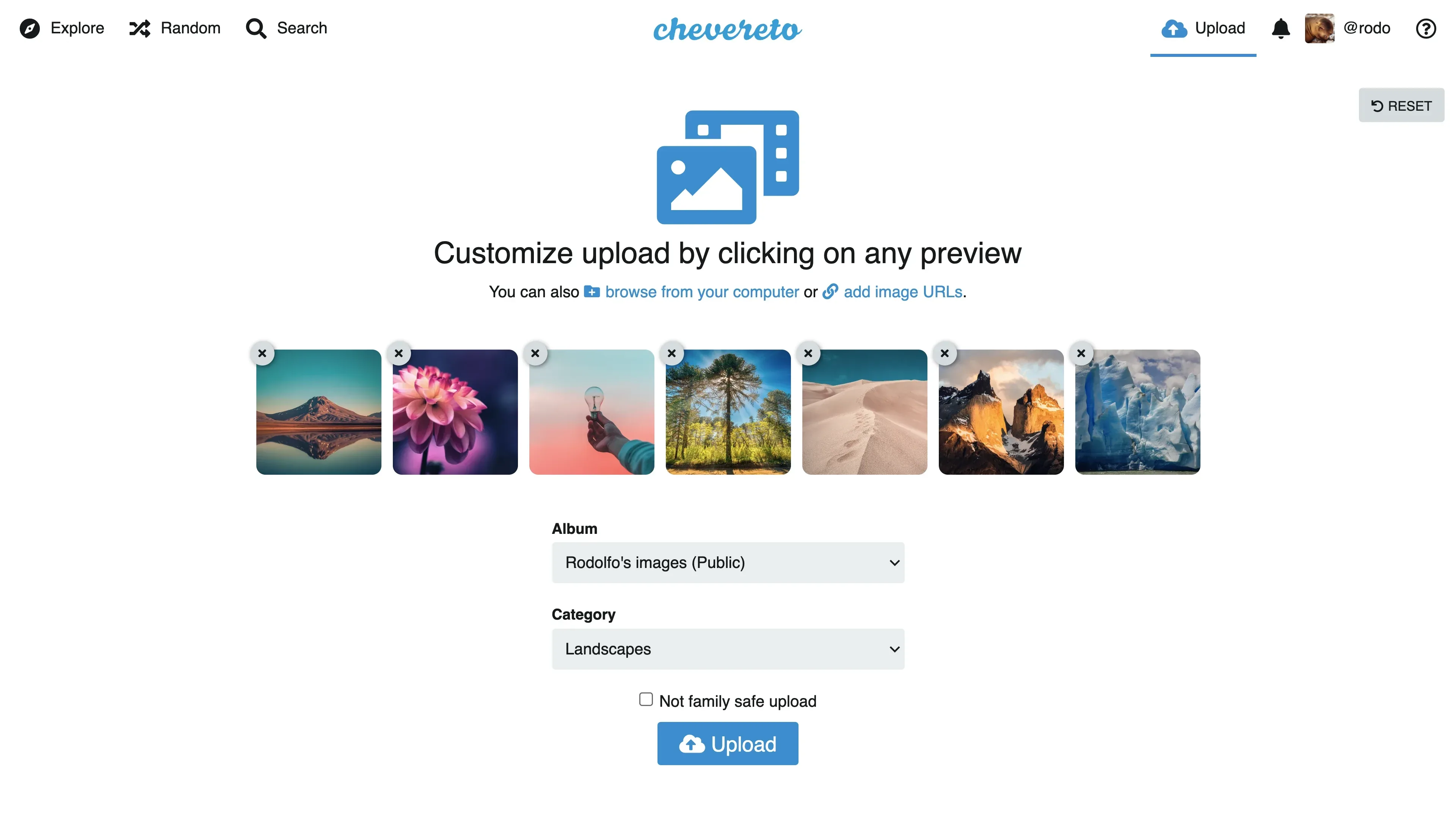
Image source: chevereto. Published by the project; the interface may vary by version.
Who it suits
Individual site owners can use it for a personal image library or media community. Teams and organizations can build an internal or public content hub around albums, categories, tags, and user accounts. Operators that need several independent sites may also evaluate its multi-tenant capability. The README mentions an official cloud service for users who do not want to manage servers, but that is a different operating model from self-hosting.
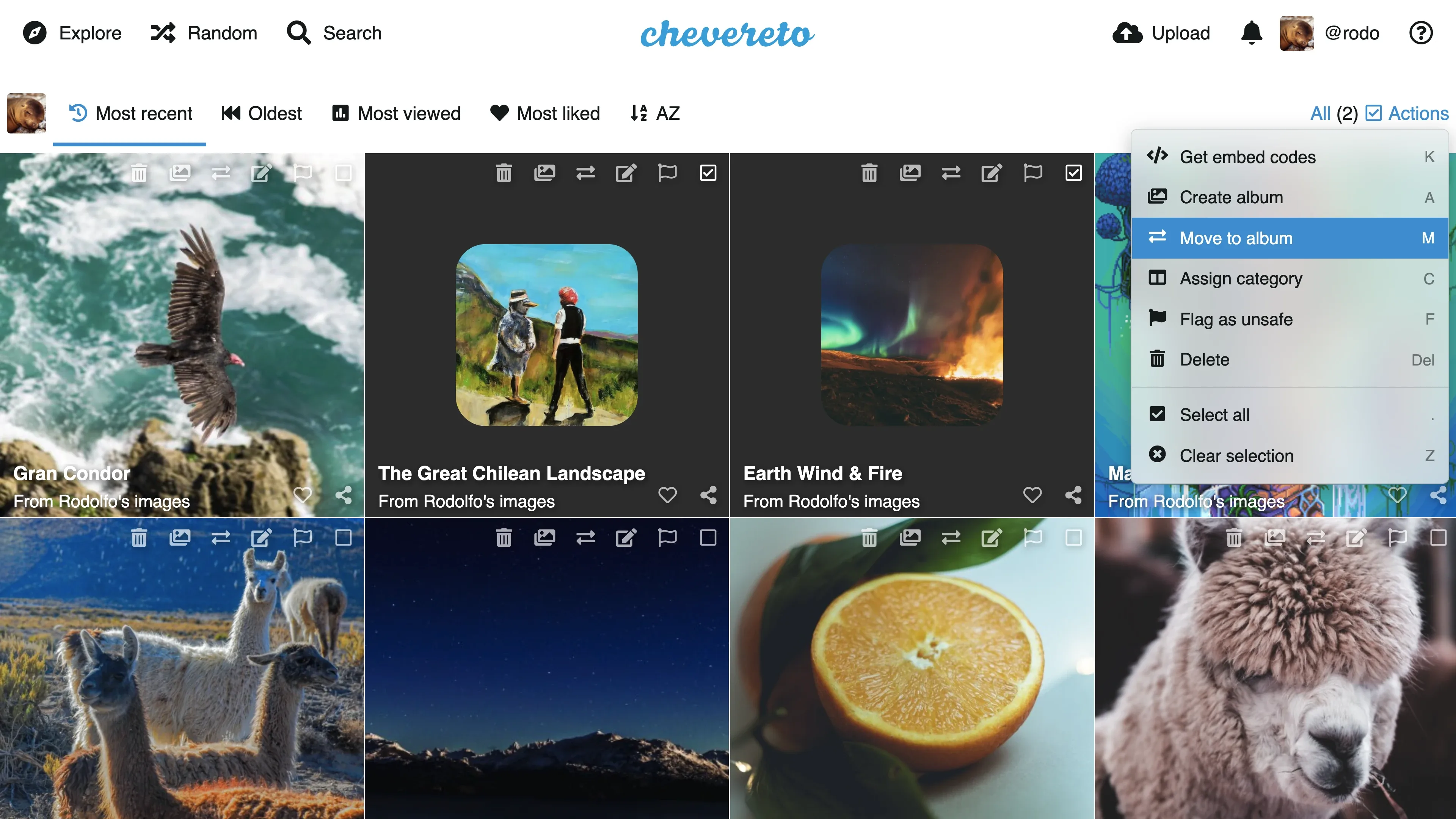
Image source: chevereto. Published by the project; the interface may vary by version.
Documented capabilities
The README lists support for images, videos, categories, tags, and albums, alongside content privacy settings and user management. Account features include registration, profiles, two-factor authentication, and roles. The interface supports responsive design and multilingual use; the project states that more than 30 languages are available. It also lists CDN support, caching, image optimization, API integration, and multi-storage-related capabilities. Whether a feature applies to a particular edition or license should be checked in the relevant documentation rather than inferred from the general feature list.
Deployment considerations
The official README lists a web server, PHP, and MySQL or MariaDB as requirements, with Redis described as optional. Installation paths include Docker, VPS, cPanel, and Plesk; the Docker option is described as compatible with x86_64 and arm64. A real deployment still requires decisions around PHP and database versions, reverse proxying, storage, email, backups, and domains. The supplied sources do not establish minimum hardware requirements or guarantee that every server environment needs no adjustments.
Media sites can grow continuously, so plan disk or object-storage capacity, backup and recovery, thumbnail and upload processing, access control, and abuse handling before launch. The sources list features but do not provide a performance benchmark, security-audit result, or specific capacity limit that can be verified here. CDN, caching, and two-factor authentication should not be treated as a complete security plan by themselves.
Licensing and version notes
Repository metadata identifies AGPL-3.0. The README also says that the Free edition uses AGPLv3, while Lite and Pro use the project’s proprietary license. Anyone modifying the software, providing it over a network, or embedding it in a commercial product should review the complete terms for the selected edition first. The official release page shows version 4.5.7 published on August 20, 2026, with fixes involving storage settings, tenant statistics, form error display, and an image-loading race condition. Before adoption, follow the release and upgrade documentation for the target version and reserve time for backups, rollback planning, and staging tests.
Sources
Sources checked: 2026-09-12