

2026.09.17
Cobalt: An Open App Platform for Kobo E-Readers
Cobalt adds a launcher, signed app store, Rust SDK, and isolated runtime to Kobo e-readers. It suits users and developers seeking e-ink-friendly apps, but device, firmware, installation, and licensing limits should be checked first.
What it is for
Cobalt is not another reading app. It is an open-source application platform for Kobo e-readers, combining a launcher, signed app store, Rust SDK, runtime, and a Clara BW simulator. Its purpose is to let Kobo devices run more e-ink-oriented applications while retaining access to the original reading experience.
After one USB installation, users can install, update, remove, or reinstall apps over Wi-Fi. App releases are separate from Cobalt platform releases, so a new store app does not necessarily require reinstalling the platform. The project lists apps for OPDS reading, feeds, tasks, terminals, papers, games, and other utilities; availability and requirements should be checked in the project’s store and documentation.
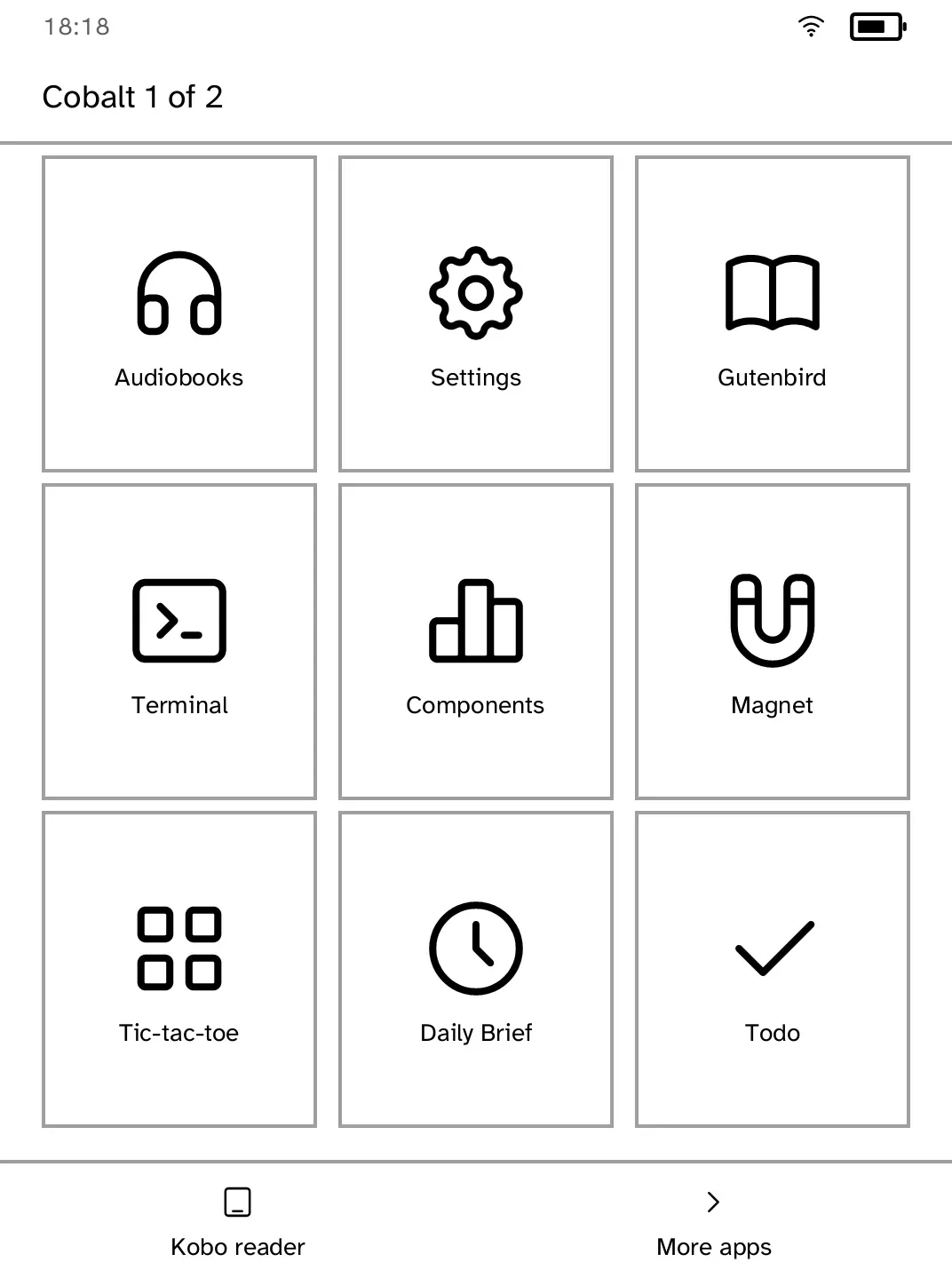
Image source: Cobalt. Published by the project; the interface may vary by version.
Who it suits
For readers, Cobalt is relevant to people who want lightweight tools, information services, or games on a Kobo without giving up the stock reader. Its launcher keeps a route back to Kobo, and the project website says a restart returns to the original reading environment.
For developers, the Rust SDK provides a declarative e-ink UI, lifecycle support, touch input, refresh planning, and a simulator. This allows app authors to focus on application behavior instead of rebuilding display handling, process management, and installation infrastructure. The official SDK documentation remains the appropriate source for implementation details.
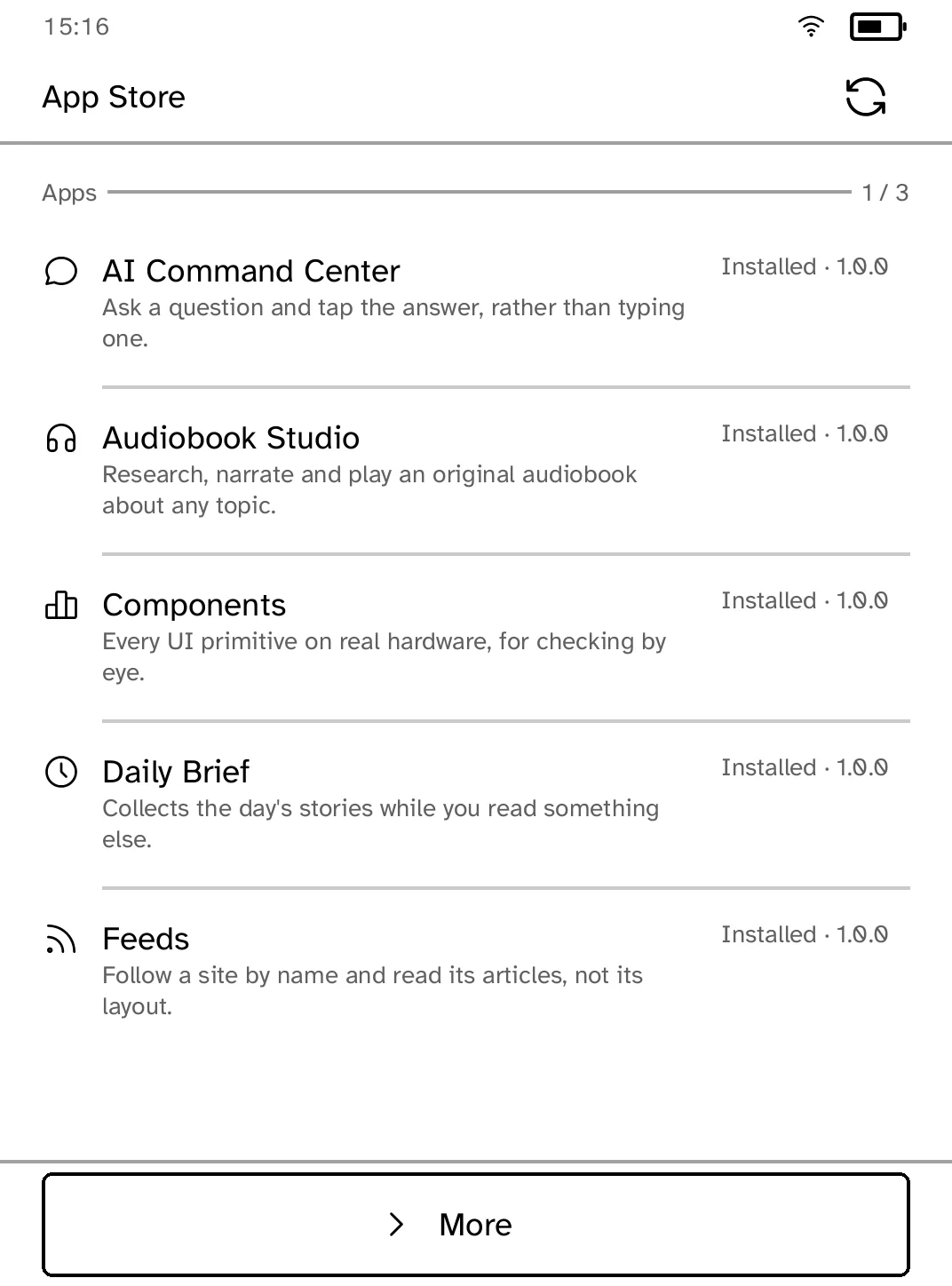
Image source: Cobalt. Published by the project; the interface may vary by version.
Known capabilities
Cobalt supports signed Wi-Fi app installation and verifies the catalog, package, installed manifest, and binary before launch. Apps run as separate unprivileged processes. The runtime also exposes per-app capability checks for services including networking, storage, audio, and the frontlight. The README describes recovery-safe app and catalog transactions and static ARMv7 binaries without a device-side package manager.
Release 0.3.15 reports a fix for older apps that exited after a platform update because of a protocol mismatch. It also adds fully tested support for Kobo Libra H2O N873 on firmware 4.38.23697 and expands host-side tools. These release notes should not be interpreted as equal support for every Kobo model.
Limits and deployment considerations
Before adopting Cobalt, check the exact device model, device code, firmware, and kernel against the support matrix. The README identifies Clara BW, Elipsa 2E, Clara HD, Libra 2, Clara Colour, Libra Colour, and Libra H2O among the hardware-tested models. Other devices may show an untested warning and allow the user to continue, but untested is not the same as verified compatibility.
The first installation modifies the user storage partition, and the project website states that the software is provided without warranty. Although the project says it does not replace Kobo’s boot chain, installation is not risk-free. Read the official installation and recovery documentation and preserve backups before deployment. Cobalt is independent and is not affiliated with Rakuten Kobo.
The repository metadata identifies the project as AGPL-3.0 licensed. Teams intending to modify, redistribute, or provide derived services should assess their obligations with the maintainers or legal counsel. Applications may also have their own requirements involving networks, synchronization, or external services; platform capabilities do not guarantee identical behavior across apps.
Cobalt is best understood as Kobo application infrastructure rather than a single reading product. It is suited to users willing to verify compatibility and accept the operational considerations of an evolving platform, as well as developers who want to build e-ink applications without recreating the common device layer.
Sources
Sources checked: 2026-09-17