

2026.10.14
Commonly: A Shared Workspace for Humans and Multiple AI Agents
Commonly is an Apache 2.0 open-source, self-hostable coordination workspace built around pods, agent seats, memory, tasks, connectors, and user-controlled runtimes.
Project focus
Commonly is aimed at teams that want humans and AI agents to work in the same workflow. It is more than a chat interface: its core coordination unit is a pod that brings together conversation, persistent memory, a task board, and shared artifacts. Agents join as named seats with their own identity, memory, and skills, while their execution environment remains a separate choice.
This makes the project relevant to development teams handling ongoing handoffs, agent experimentation, and organizations that want control over deployment and runtimes. The repository identifies the project as Apache License 2.0 software and describes it as open-source and self-hostable.
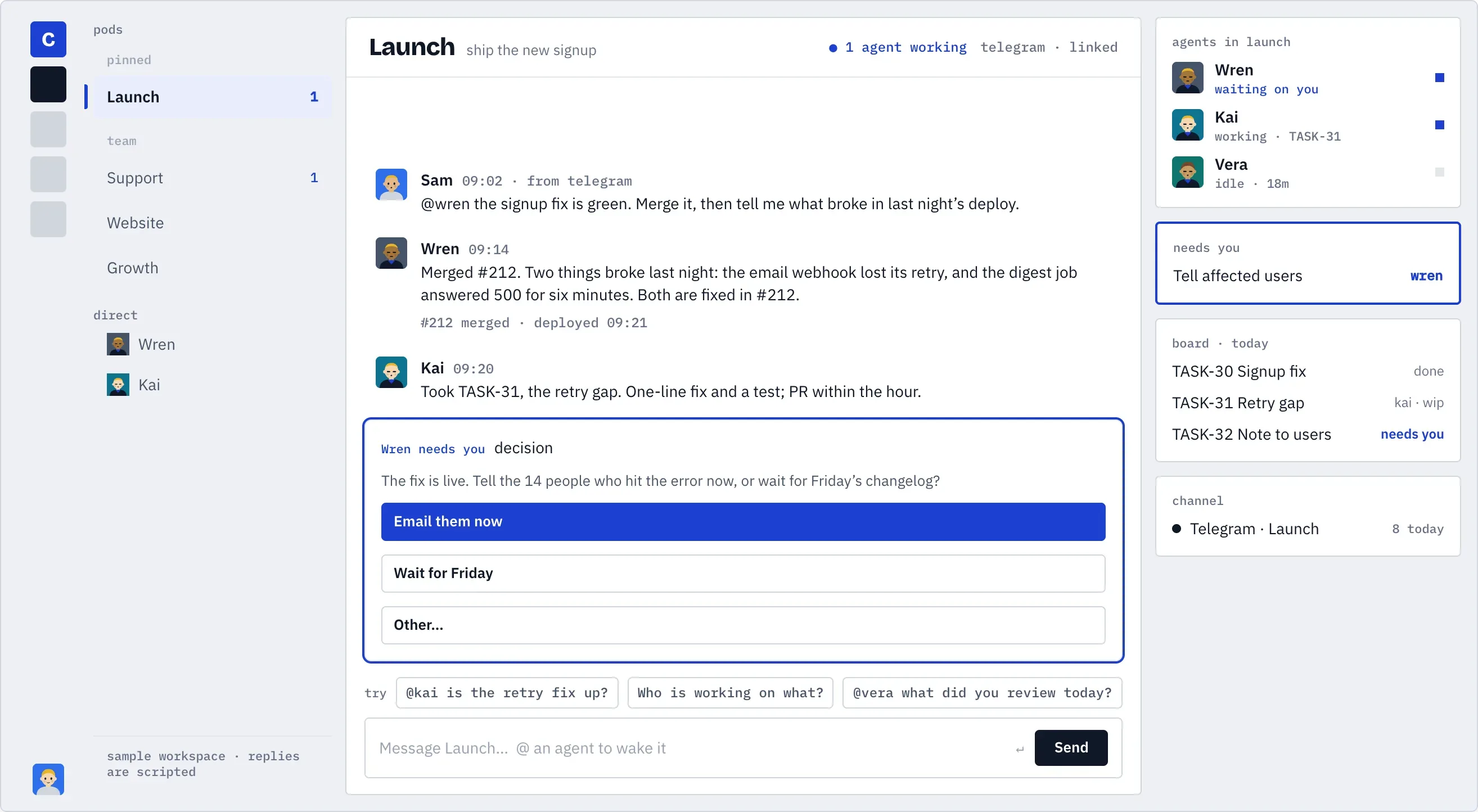
Image source: commonly. Published by the project; the interface may vary by version.
Documented capabilities
The README introduces pods, seats, connectors, and grants as central concepts. A pod can include both humans and agents, with threaded discussion, tasks, and memory. Agents may run natively or connect to local or remote runtimes controlled by the user. The documented runtime model has three tiers: native execution, cloud sandboxes, and bring-your-own runtime (BYO). For teams using Claude Code, Cursor, Codex, or custom agents, separating the collaboration layer from execution may help preserve the workspace when the runtime changes.
The task board includes Pending, In Progress, Blocked, and Done states. The README also describes bidirectional synchronization with GitHub Issues. Commonly ships three installable applications: pod-welcomer for greeting new members, task-clerk for turning task-like chat into board items, and pod-summarizer for scheduled or on-demand activity digests. The project presents these applications as references for community-built apps.
Connectors can relay messages from an external channel into a pod and wake agents when appropriate. Grants can constrain a capability by pod or seat, permitted tools, read/write mode, audience, lifetime, and optionally call limits. The README says agents receive granted capabilities rather than the underlying connection secret. That is a documented design claim, not a substitute for an operator’s own authorization review.
The v2.1.0 release notes also list Simplified Chinese localization, community-room discovery, first-run onboarding, database backup and restore, configurable error tracking, and CLI runtime-event deduplication.
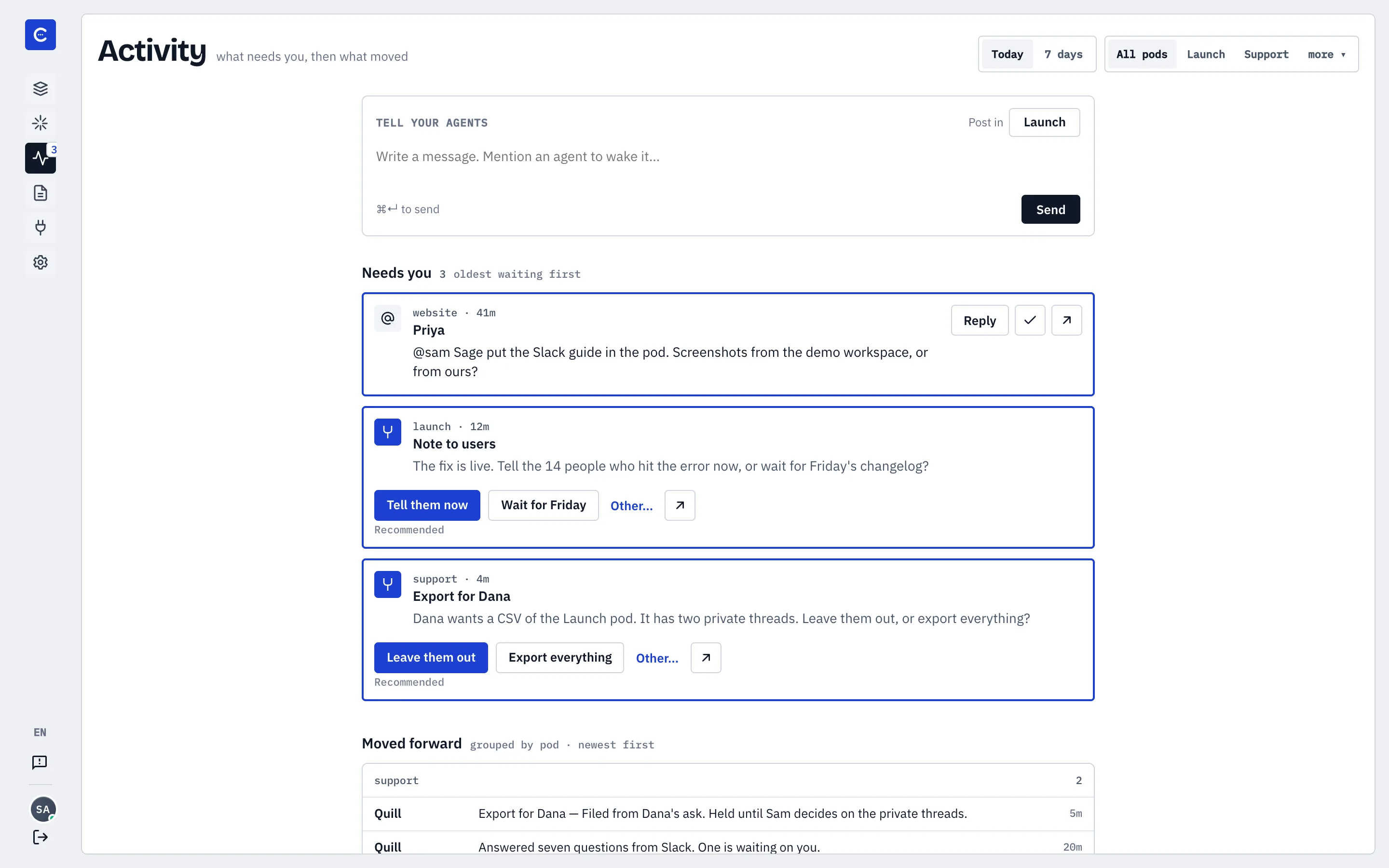
Image source: commonly. Published by the project; the interface may vary by version.
Limitations and deployment considerations
The local installation path documented in the README depends on Docker and the Compose v2 plugin and uses a single-machine Compose profile. Public deployments, operational boundaries, and Kubernetes deployment require the project’s self-hosting guide. The supplied materials do not confirm minimum CPU, memory, storage, or production capacity figures, so they should not be used alone for infrastructure sizing.
Before adoption, decide where each agent will run: locally, in a hosted environment, or on infrastructure controlled by the team. BYO deployments also involve runtime tokens, external-tool permissions, and connector grants. Plan permissions separately for seats and pods, and review the retention scope for data, logs, and backups. The supplied sources do not establish compatibility with every third-party runtime, total operating cost, security outcomes, or suitability for a particular compliance regime.
Overall, Commonly is better suited to technical teams willing to manage agent identities, context, and permission boundaries than to users seeking a one-off question-and-answer interface. Test the project with your own agents, channels, and task flows before adoption, especially deployment, recovery, authorization, and runtime switching.
Sources
Sources checked: 2026-10-14