

2026.10.25
Conduit: Bring Open WebUI and Self-Hosted Models to Mobile
Conduit is a GPL-3.0 Flutter client for iOS and Android, designed to connect mobile users with Open WebUI, personal model endpoints, and Hermes agents.
What it is for
Conduit is a Flutter mobile client for iOS and Android. It is designed to give mobile users access to Open WebUI, their own model endpoints, and self-hosted Hermes agents. Open WebUI is not mandatory: the README lists Open WebUI, Direct, Apple On-Device, Apple PCC, and Hermes as connection options.
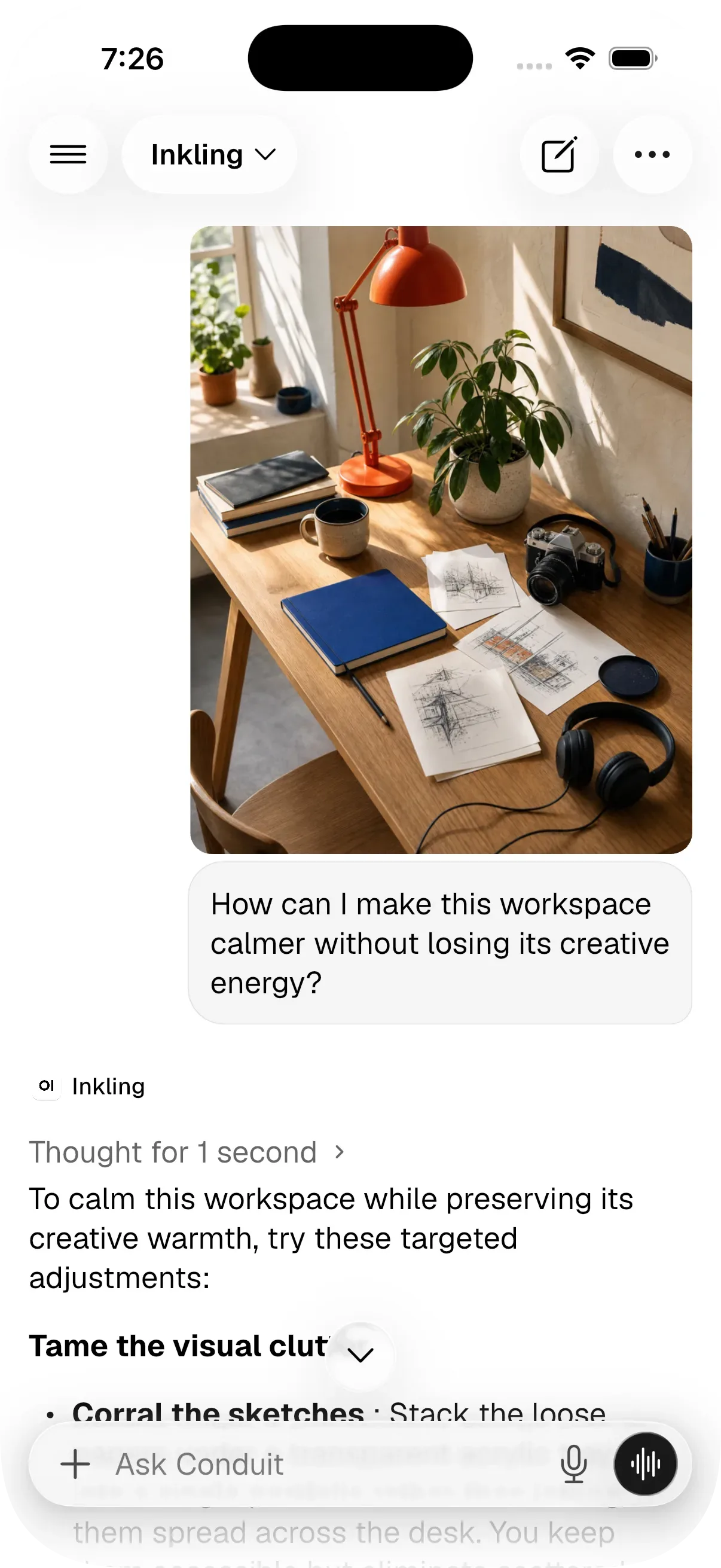
Image source: conduit. Published by the project; the interface may vary by version.
Who it suits
The project suits individuals and teams already running Open WebUI, Ollama, or another OpenAI-compatible service who want a mobile interface. It also fits users who want to connect directly to a local or remote model without an Open WebUI account. People operating a self-hosted agent can connect Conduit to their own Hermes server.
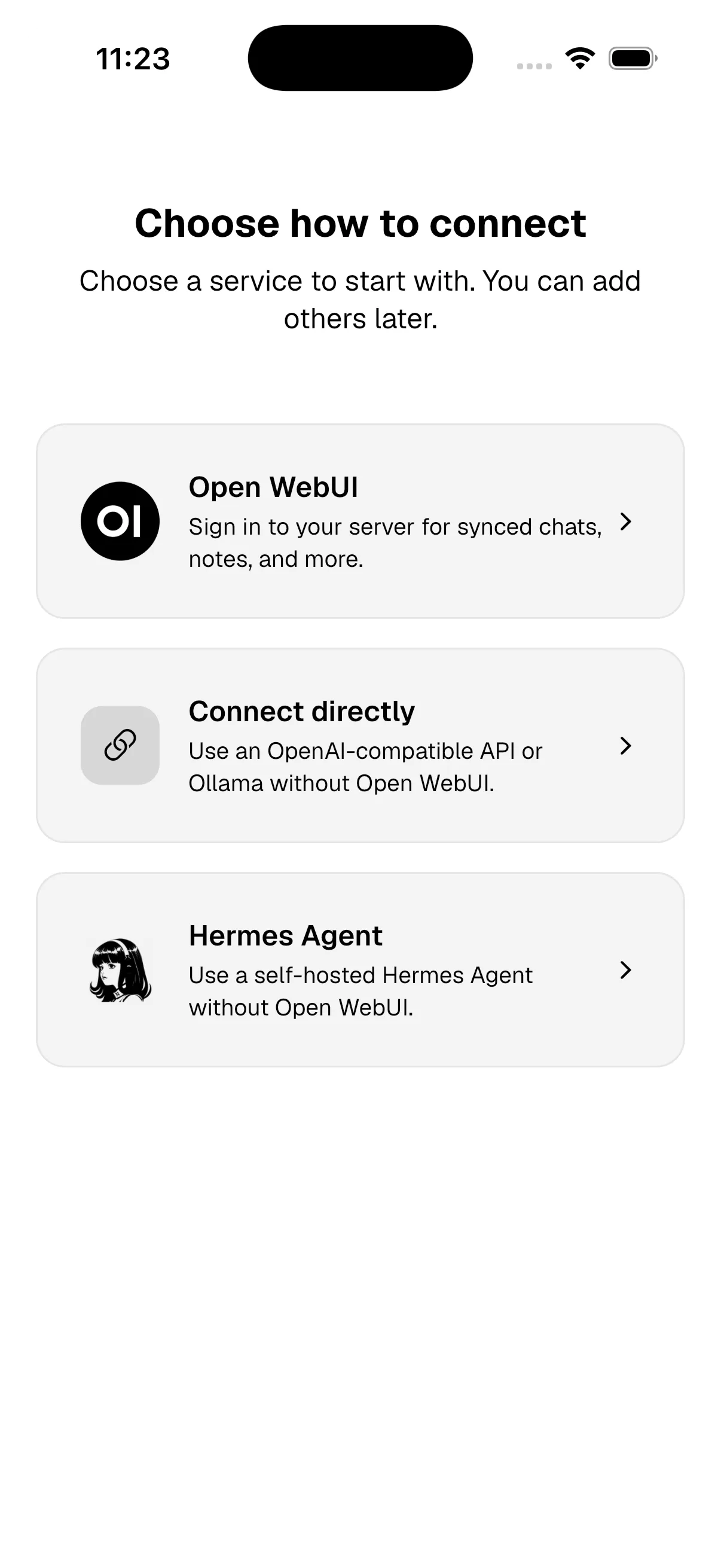
Image source: conduit. Published by the project; the interface may vary by version.
Documented capabilities
The Open WebUI path covers chats, folders, notes, channels, workspace features, tools, web search, and image generation, although each feature depends on what the server exposes. Direct connections support OpenAI-compatible Chat Completions or Responses, LM Studio, Azure-style API versions, native Ollama, and OpenRouter. The app also provides mobile chat features such as streaming, conversation search, folders, temporary chats, syntax-highlighted code, Mermaid, LaTeX, and expandable tool-call or code-execution sections.
The README additionally lists file and media uploads, image pasting, audio attachments, voice input, voice-call mode, share-sheet ingestion, home-screen widgets, and an interactive terminal when the server exposes it. Hermes can show tool activity and request approval before sensitive steps; the available capabilities depend on what the Hermes server reports.
The project says credentials are stored in iOS Keychain or Android Keystore, and that no maintainer-operated backend relays traffic. According to the repository metadata, Conduit is released under GPL-3.0.
Limitations before adoption
Many features depend on backend configuration, authentication, and server version. Client support does not mean that every feature is enabled in a deployment. Apple On-Device and Apple PCC are iOS-only options. The README specifies iOS 26 or iOS 27 requirements respectively, together with Apple Intelligence and the relevant availability conditions. Their feature sets also differ: Apple On-Device lacks image input, reasoning controls, and tool calling, while PCC does not enable tool calling. The supplied material does not confirm device, regional, or system eligibility beyond those statements.
For Open WebUI, the README says the project supports Open WebUI 0.11, while the official v4.2.1 release notes mention support for Open WebUI 0.12.2. Deployment teams should verify the target release against their own instance. A self-hosted Hermes setup also requires an accessible Hermes server and its API_SERVER_KEY. The sources provide no minimum hardware requirements, performance measurements, or security-audit conclusions, so those points remain unconfirmed.
Deployment considerations
Users should prepare a service address reachable from the mobile device, authentication details, API keys or custom headers, and a plan for reverse-proxy, SSO, LDAP, JWT, or tunnel configurations where applicable. The repository links to source-build documentation, but the supplied material does not confirm the complete build environment. Official release v4.2.1 was published on October 16, 2026 and includes Open WebUI 0.12.2 support. Before adoption, check that the app version, server version, and required features align.
Sources
Sources checked: 2026-10-25