

2026.09.12
Facet: Local AI Scoring and Culling for Photo Libraries
Facet combines local photo scoring, burst culling, face recognition, and semantic search in a self-hosted gallery for photographers managing large libraries.
What it is
Facet is a local photo-analysis, culling, and gallery project. It combines scanning, scoring, browsing, and organization in a web interface, aiming to help users review large libraries without depending on cloud accounts or third-party API keys. The README describes the application as running on the user’s machine with no cloud, accounts, or API keys. That does not remove the need for storage, computing resources, backups, and careful access planning.
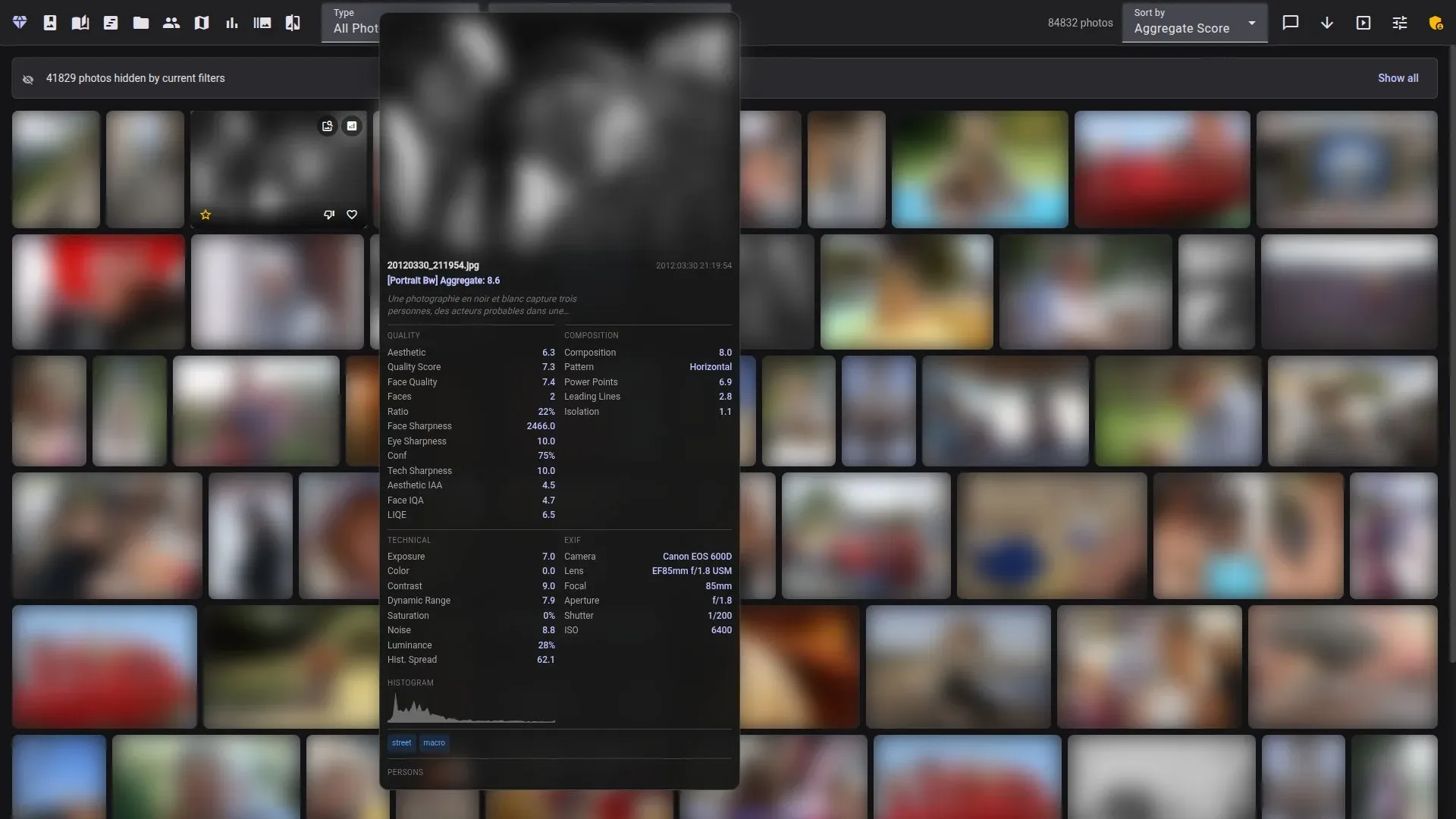
Image source: facet. Published by the project; the interface may vary by version.
Known features
Facet can scan a photo folder and supports JPG, HEIF/HEIC, and the 10 RAW formats listed in the README. It scores images across nine dimensions, including aesthetic quality, composition, face quality, eye sharpness, technical sharpness, color, exposure, subject saliency, and dynamic range. Photos can also be browsed by content categories.
Its culling workflow includes burst detection, similarity groups, near-duplicate detection, and blink detection. The project also recognizes exposure brackets, panoramas, and HDR sets, keeping those multi-frame groups together rather than reducing them to a single winner. Scene grouping and automatic culling may reduce repetitive review for users organizing shoots chronologically, but AI decisions should still be treated as review aids rather than unconditional deletion rules.
The gallery supports semantic search, timelines, maps, folders, albums, face recognition, tags, star ratings, and batch operations. The README also lists WebDAV phone intake, shared albums, client proofing, static portfolio export, downloads, and CSV/JSON export. The project website describes interoperability with Lightroom, darktable, and digiKam through standard sidecar files; prospective users should verify the exact fields and workflow before relying on that integration.
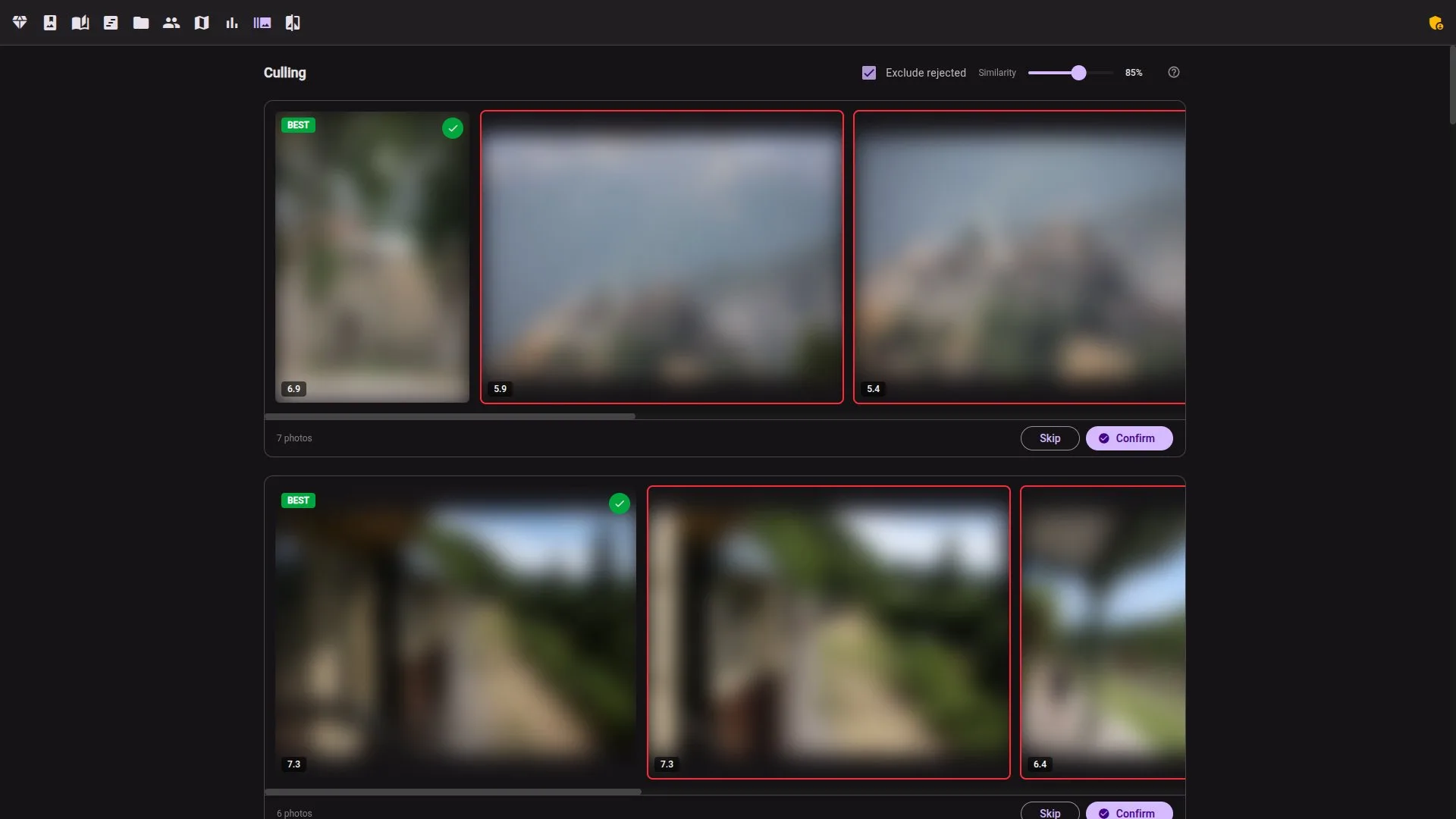
Image source: facet. Published by the project; the interface may vary by version.
Who it suits
Facet is aimed at photographers, event and wedding shooters, families with sizable photo libraries, and self-hosting users who want local analysis and search. It is a good fit for people with an established folder structure who are willing to review AI judgments and want gallery browsing and culling in one system.
A lighter photo-browsing need may not justify the additional indexing and management complexity. Users who require precise color decisions, fully manual professional selection, or unusual RAW workflows should not use scores as the sole basis for deleting originals.
Limitations and deployment considerations
The supplied GitHub metadata labels the license as “Other” with SPDX NOASSERTION, while the README and website display MIT licensing. Before deployment or redistribution, verify the repository’s actual license files directly. The supplied sources do not establish complete minimum hardware requirements, scan times, performance at a particular library size, or disk usage, so those points remain unconfirmed.
The project says GPU use is optional and that it can run on CPU; some README features are marked for GPU or 16/24GB VRAM profiles. Check resource needs against the specific features you plan to enable. Native installation and Docker are listed for Windows, macOS, and Linux, but backups, volume mappings, database protection, read-only photo access, network exposure, and shared-link governance remain deployment responsibilities. Release v1.15.0 strengthens confirmation for whole-filter batch selection and related multi-user access boundaries. Before upgrading, back up the database and photo directories and validate bulk actions in a test library.
Sources
Sources checked: 2026-09-12