

2026.10.05
Family Ledger: An Open-Source Self-Hosted Tool for Household Assets
Family Ledger is aimed at households that want a consolidated, self-hosted view of assets and periodic portfolio analysis. It is not a daily bookkeeping app, and deployment, backups, credentials, and external services remain the operator’s responsibility.
What the project is for
Family Ledger is a self-hosted household asset-management project. It brings information from bank accounts, payment platforms, brokerages, property, and liabilities into a shared household view. It also provides account-level and household-level XIRR, plus asset-level TWR, to help separate external contributions from investment results. The repository is licensed under Apache License 2.0 and lists Java 21, Spring Boot 3.3, and MySQL 8 among its technologies.
Its core model is not transaction-by-transaction bookkeeping. The README describes month-end account snapshots together with external cash flow during the period. It also explicitly excludes daily ledgering, budgeting, recurring-investment reminders, and broker order placement. That makes it more suitable for households that want a periodic net-worth and portfolio review than for users who need detailed expense tracking.
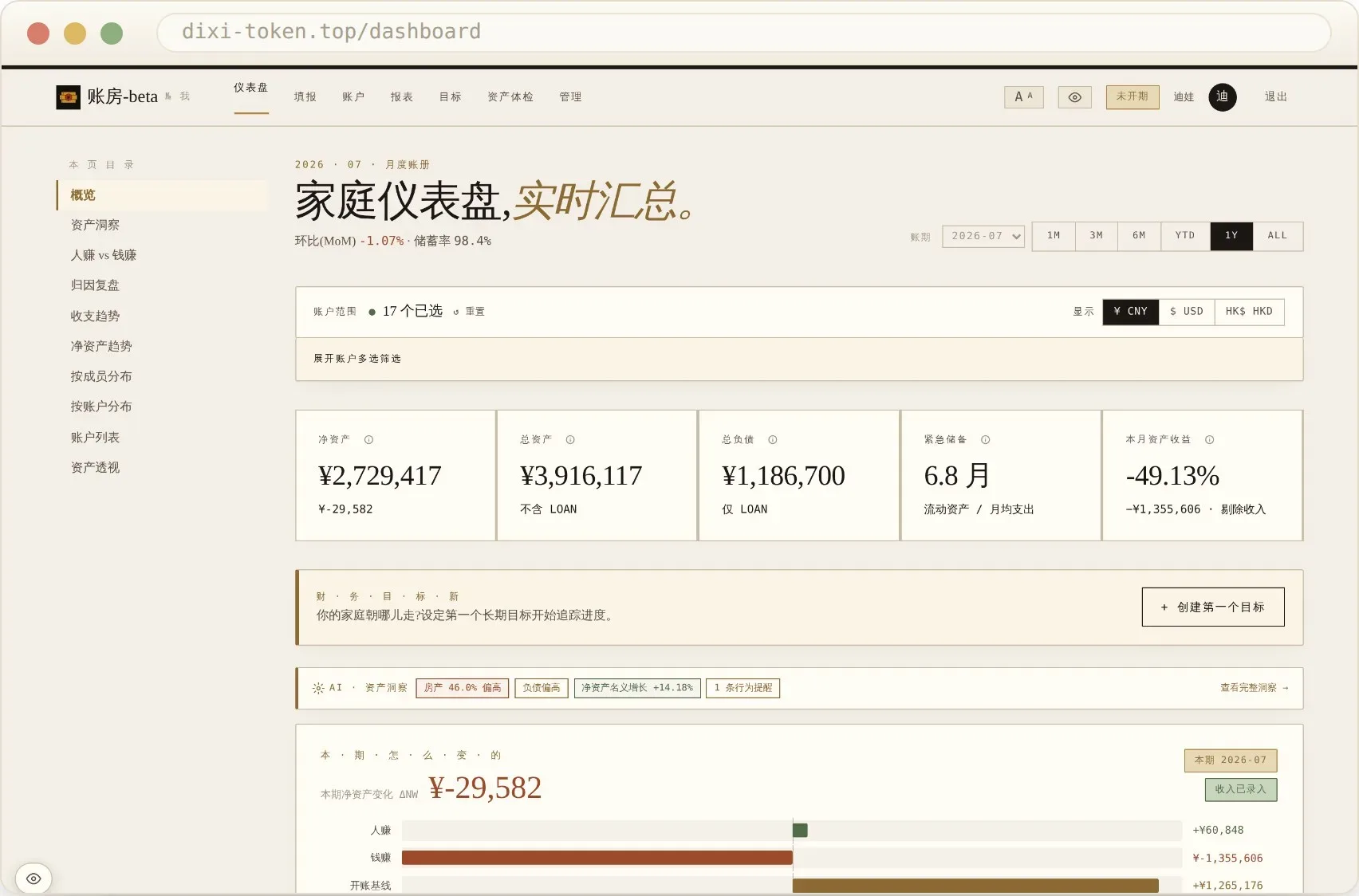
Image source: financial-management. Published by the project; the interface may vary by version.
Documented capabilities
The project groups assets across nine account categories and supports household views by member. Users can inspect assets by risk, asset class, industry, platform, purpose, region, and currency. Fund positions may be broken down into equities, bonds, cash, and industry exposure, although the coverage and accuracy of any look-through depend on the available data sources and project labels.
Its AI features have two main roles. First, users can upload screenshots from fund, wealth-management, or brokerage accounts; the system identifies position names and values, then compares them with existing records as additions, updates, or sales. Second, AI can interpret portfolio checkups and proposed rebalancing actions. The project says that numerical calculations are performed by software while the language model interprets them, and that it does not recommend products or predict price movements. Users should still review extracted data, prompts, and the privacy terms of any external model provider.
The README also lists multi-currency support, market-price valuation, CPI and M2 trend lines, FIRE and other financial goals, optional expense analysis, and reminders. Release v1.29.0 adds options, futures, and bonds to synchronization for IBKR, Futu, and Tiger. However, the release notes state that Futu and Tiger options were not run against real accounts, so adopters should not treat those integrations as fully validated.
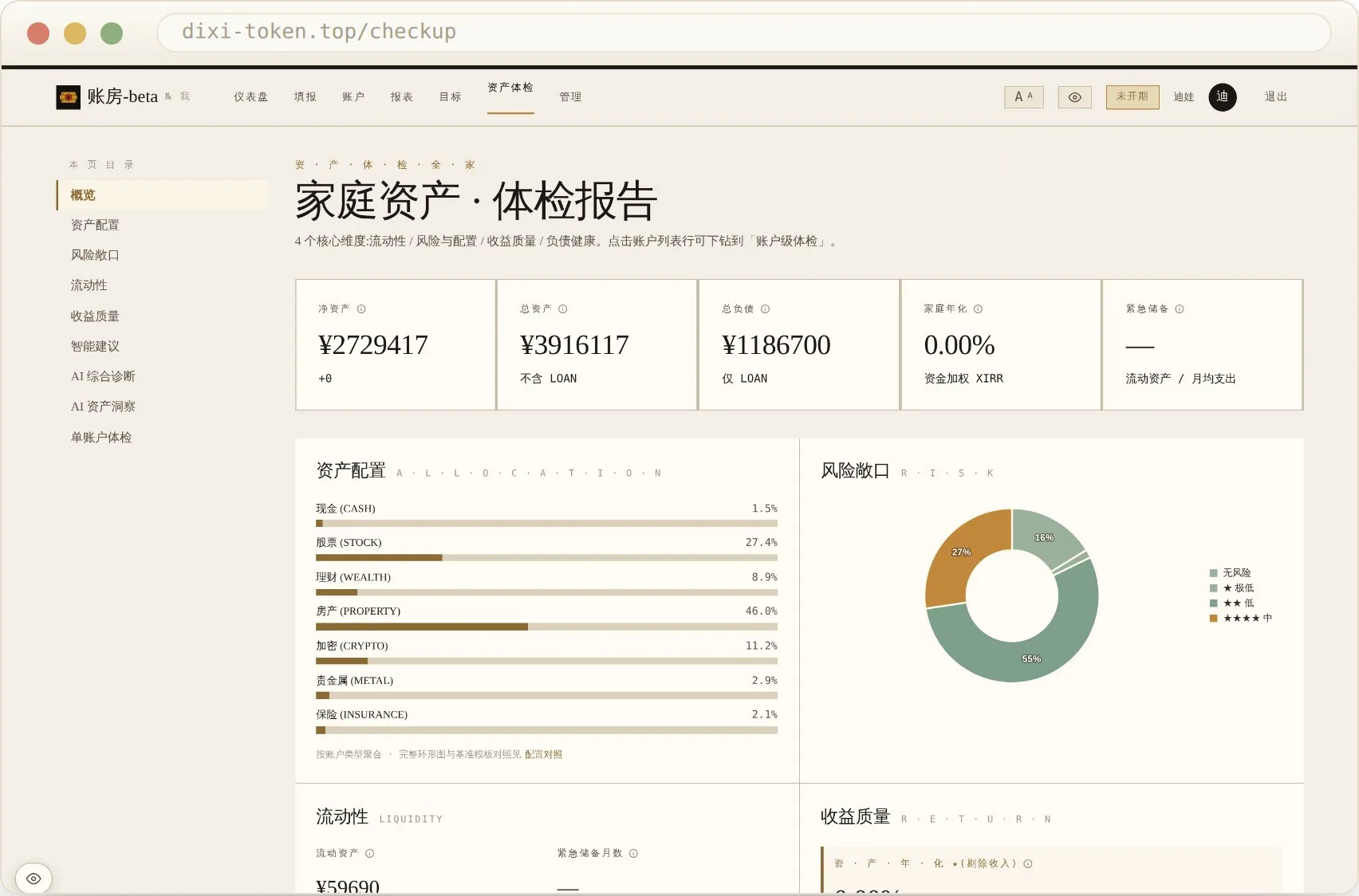
Image source: financial-management. Published by the project; the interface may vary by version.
Who may benefit
The project is aimed at people who can maintain a Linux server, NAS, or personal computer and are willing to update household data periodically. Its self-hosted model may suit couples or families that need asynchronous data entry and a cross-account overview without placing their full financial picture in a commercial application. Apache 2.0 supports inspection and modification, but it does not transfer deployment, backup, or third-party service responsibilities to the maintainers.
Limitations and deployment considerations
This is not an app-store installation. The README documents Docker Compose, systemd, and macOS deployment paths, and states a minimum configuration of 1 GB RAM, one CPU core, and roughly 2 GB of disk. Those figures come from project documentation and are not independent measurements. Remote installations bind to loopback by default, so external access requires an SSH tunnel or a reverse proxy with HTTPS. Before using real data, operators should plan database backups, restore tests, upgrade and rollback procedures, certificates, and access controls.
Market prices, exchange rates, fund data, messaging, and model-based image recognition may depend on external services or credentials. Availability, cost, regional connectivity, and data coverage should be checked separately. AI imports should remain subject to manual review, especially for options, futures, bonds, and multi-currency accounts. Finally, self-hosting does not automatically make a deployment secure: the server, backups, logs, secrets, and reverse proxy remain the operator’s responsibility.
Sources
Sources checked: 2026-10-05