

2026.09.20
FlareMo: Personal Notes and Team Knowledge on Cloudflare
FlareMo is a Cloudflare-native knowledge base for individuals and teams, combining notes, tasks, MCP, AI memory, and collaboration controls. Review platform dependency and deployment requirements before adopting it.
Project focus
FlareMo is a personal and team knowledge base built around Cloudflare services. Individuals can use it as a low-distraction timeline and long-term memory space, while teams can enable collaboration, share selected content, and manage members by role. The repository is licensed under AGPL-3.0, and its metadata describes Memos-compatible API and MCP support.
It is a plausible fit for developers, independent creators, and small teams that want less server maintenance without handing all notes to a closed SaaS. It may also be easier to adopt if your organization already uses Cloudflare Workers, D1, or R2. If local-first operation, cloud independence, or mature enterprise document governance is mandatory, verify those requirements before choosing it.
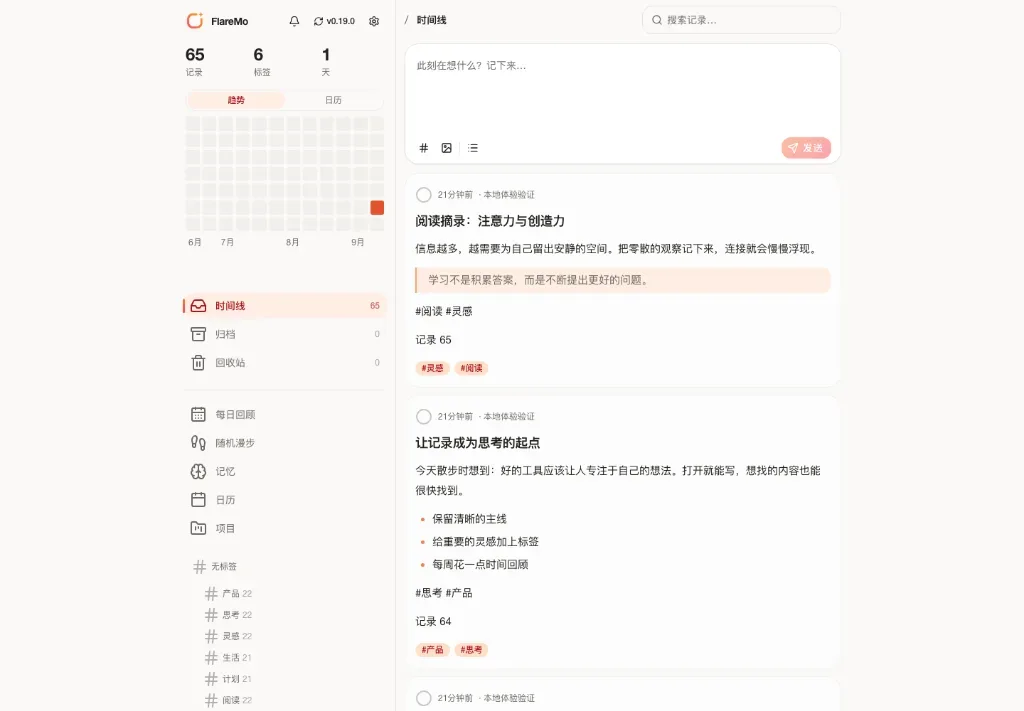
Image source: FlareMo. Published by the project; the interface may vary by version.
Known capabilities
The main experience is a card-based timeline with tags, Markdown/GFM, and image and audio attachment previews. Search uses SQLite FTS5 and supports filters for attachments, pinned notes, date ranges, and storage locations. FlareMo also documents semantic search using Workers AI embeddings and Vectorize; permissions are rechecked against D1, with full-text search available as a fallback. Daily Review, Random Walk, related-note recommendations, revision diffs, and historical restore support review and knowledge maintenance.
AI integration is a central feature. Agent Memory lets an AI record cross-session preferences, decisions, constraints, and lessons, while users can review, correct, or lock those memories. A standard MCP endpoint supports programmatic querying and note creation. The project also includes project boards, task priorities and due dates, a calendar view, overdue notifications, installable PWA behavior, offline drafts with queued synchronization, and a live voice-transcription entry point.
Team mode defines owner, admin, and member roles. Notes can be private to the author, readable by active team members, or anonymously readable through time-limited links. The README also describes reader seats, cleanup when members are removed, Memos/flomo import and export, and Memos API compatibility. The plugin system supports catalog installation, local uploads, and custom cards. The project says plugins run in an isolated origin without network access by default, while community or branded plugins require explicit administrator enablement.
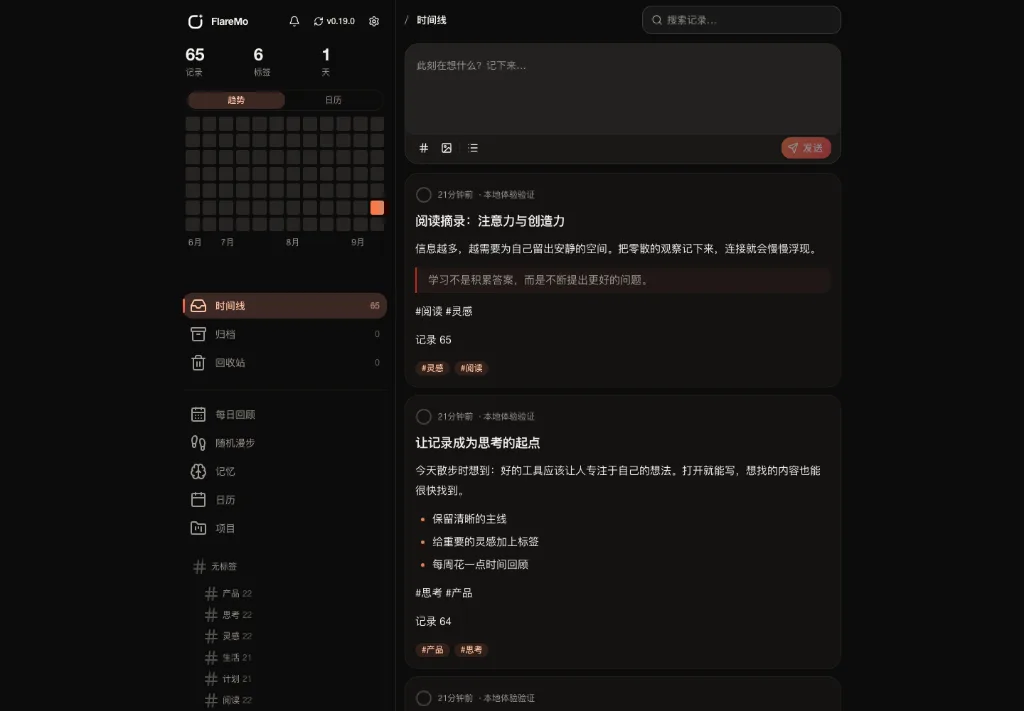
Image source: FlareMo. Published by the project; the interface may vary by version.
Limitations and deployment considerations
FlareMo’s convenience depends on Cloudflare. Deployment requires configuring Workers and related D1 and R2 resources; semantic search, attachments, queues, and push-related features should be checked against the actual account configuration and service availability. The README’s statements about free quotas, global locations, replication, and latency are project claims, not guarantees of your cost, performance, or durability.
Plan data governance before adoption. Team visibility, public share links, AI memories, and attachments need separate retention, revocation, and backup policies. If MCP or Personal Access Tokens connect automation tools, limit their permissions and manage their lifecycle carefully. The project documents security measures, but this article does not make an independent security assessment.
Read the deployment and plugin documentation, license, and changelog, then validate resources, domains, authentication, backup, and recovery in the target account. The official v0.20.0 release notes report debounced search, request cancellation, and recoverable loading failures, with no API, data, migration, or resource changes. That release note does not replace a version-by-version review for later updates.
Sources
Sources checked: 2026-09-20