

2026.10.05
Gatus: Self-Hosted Status Pages Built Around Active Health Checks
Gatus gives developer teams active service checks, a status dashboard, and alerting, helping them detect problems before users report them.
What it solves
Gatus is an automated, developer-oriented status page and health dashboard. Rather than relying only on metrics produced by existing traffic, it actively checks configured services or features and displays the results. This is useful for teams that want to identify failures before users report them.
It supports HTTP, ICMP, TCP, and DNS queries. Results can be evaluated with conditions beyond an HTTP status code, including response time, response body, certificate expiration, and IP address. That makes it suitable for basic availability monitoring as well as checks that resemble user-facing interface validation. The README also describes using the project for automated user acceptance tests.
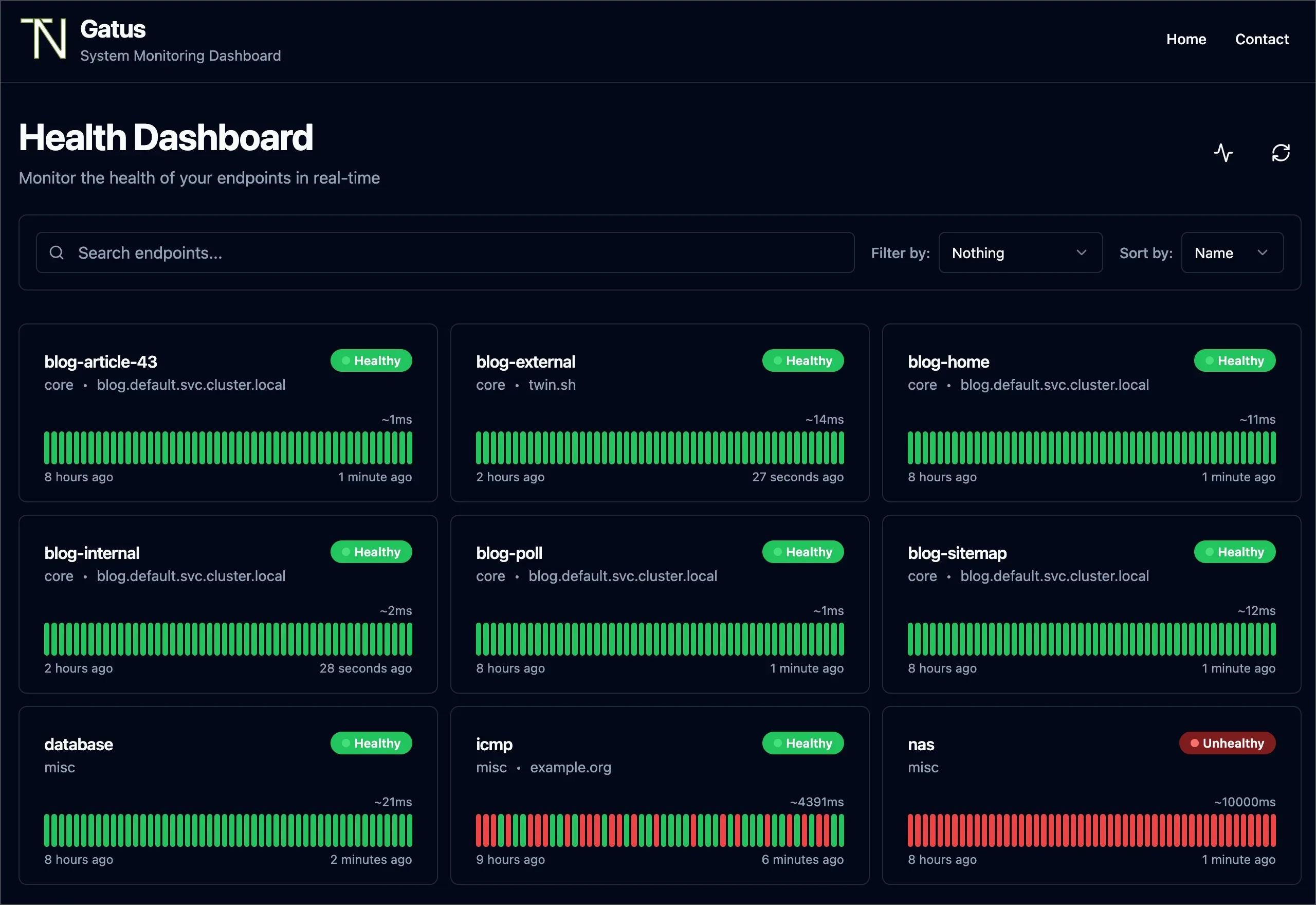
Image source: gatus. Published by the project; the interface may vary by version.
Who it suits
Gatus is a good fit for developer teams, platform engineers, and self-hosting users who are comfortable maintaining configuration and understanding network probes and alerting. Small teams can use it to present the state of core services, while teams running containers or Kubernetes can integrate it into an internal service portal or an external status page. It is not a fully managed monitoring service: operators still need to choose endpoints, conditions, notification policies, and access controls.
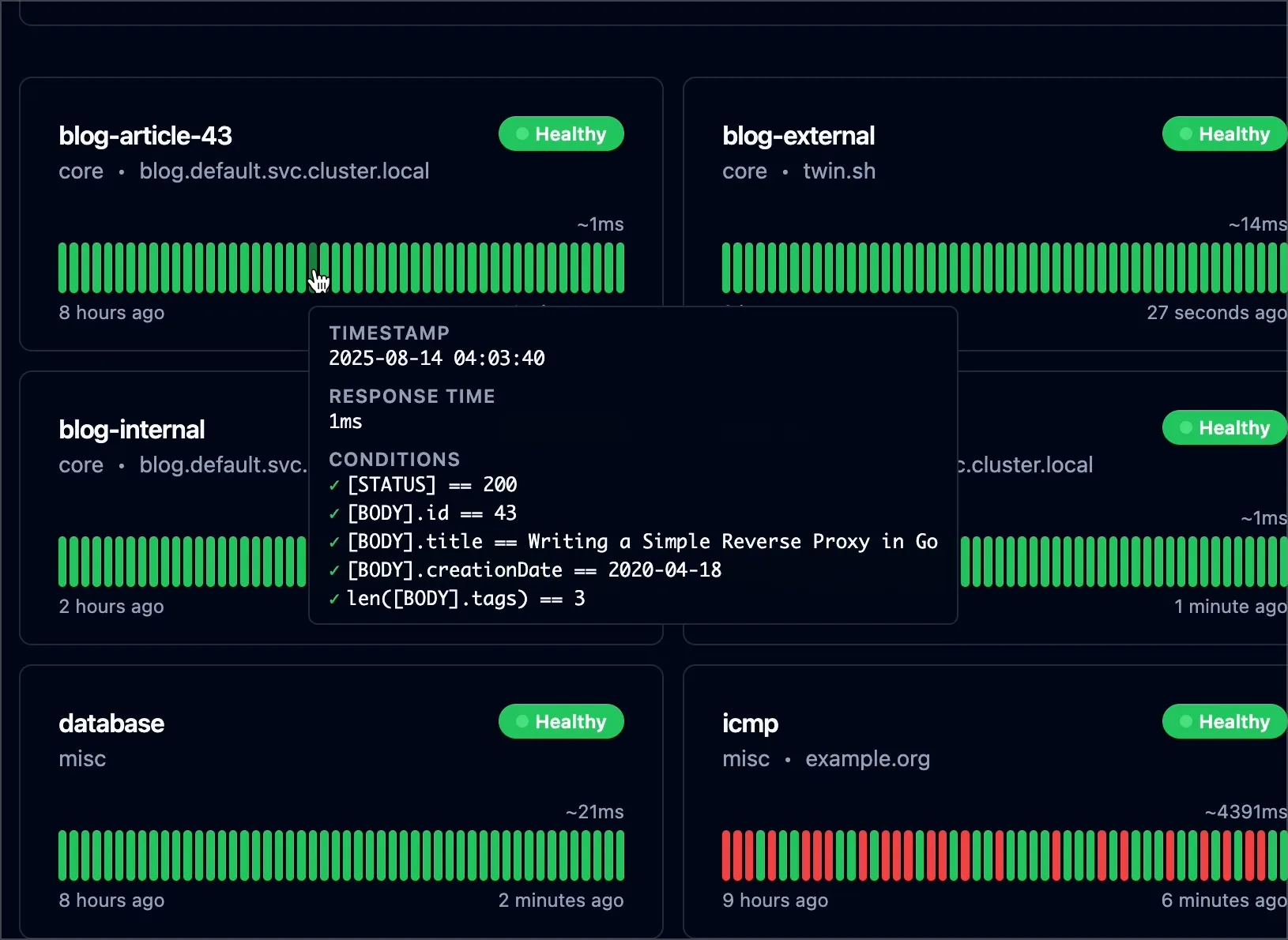
Image source: gatus. Published by the project; the interface may vary by version.
Known capabilities
Alerting is a central part of the project. The README lists integrations such as Slack, Mattermost, PagerDuty, Twilio, Google Chat, and Teams, while the broader documentation index includes Discord, email, Telegram, Matrix, Gotify, and Opsgenie among others. Custom alert providers are also supported. Deployment documentation covers Docker, Helm Chart, Terraform, and Kubernetes, allowing operators to align the installation with existing infrastructure.
Repository metadata identifies Apache License 2.0 and shows that the repository is not archived. The official v5.37.0 release was published on September 24, 2026; its listed changes include configurable topics for Zulip alerts, client cookie storage configuration, and DNS TXT query support. Use the release and project documentation appropriate to the environment being deployed.
Limitations and deployment considerations
An active check does not automatically prove that an entire business workflow is healthy. The probe’s network location, DNS behavior, proxy settings, certificate trust, and authentication configuration can all affect results. If the status page and monitored services share the same failure domain, an incident may remove both monitoring visibility and the page itself. Consider isolation, external reachability, and access control for the status page.
Alert integrations commonly involve tokens, webhooks, or third-party accounts. Follow the project documentation, limit credential permissions, and avoid exposing secrets in public configuration or logs. Teams should also plan intervals, timeouts, retries, maintenance windows, historical storage, and notification suppression; otherwise transient network issues or aggressive checks can create noise. The README provides a basic Docker quick start, but the supplied sources do not confirm resource requirements, permissions, or production suitability for a particular environment. Validate those details before deployment.
Sources
Sources checked: 2026-10-05