

2026.09.27
Immich: Deployment Considerations for Self-Hosted Media Management
Immich lists mobile backup, web gallery access, and multi-user features. Before adopting it, assess storage, backups, client differences, and ongoing operational responsibility.
What the project is for
Immich is a self-hosted photo and video management solution. Its repository describes it as a high-performance project and identifies its license as AGPL-3.0. It can suit individuals, families, or small teams that want to operate a media library, upload and view content through mobile clients, and manage a gallery on the web.
The README feature table shows that uploading and viewing photos and videos are available on both mobile and web. Multi-user support, albums, and shared albums are also listed for both. That is relevant for people organizing a household collection or giving several users access to one service. Self-hosting may be a poor fit, however, for people unwilling to manage a server, storage, and routine maintenance.
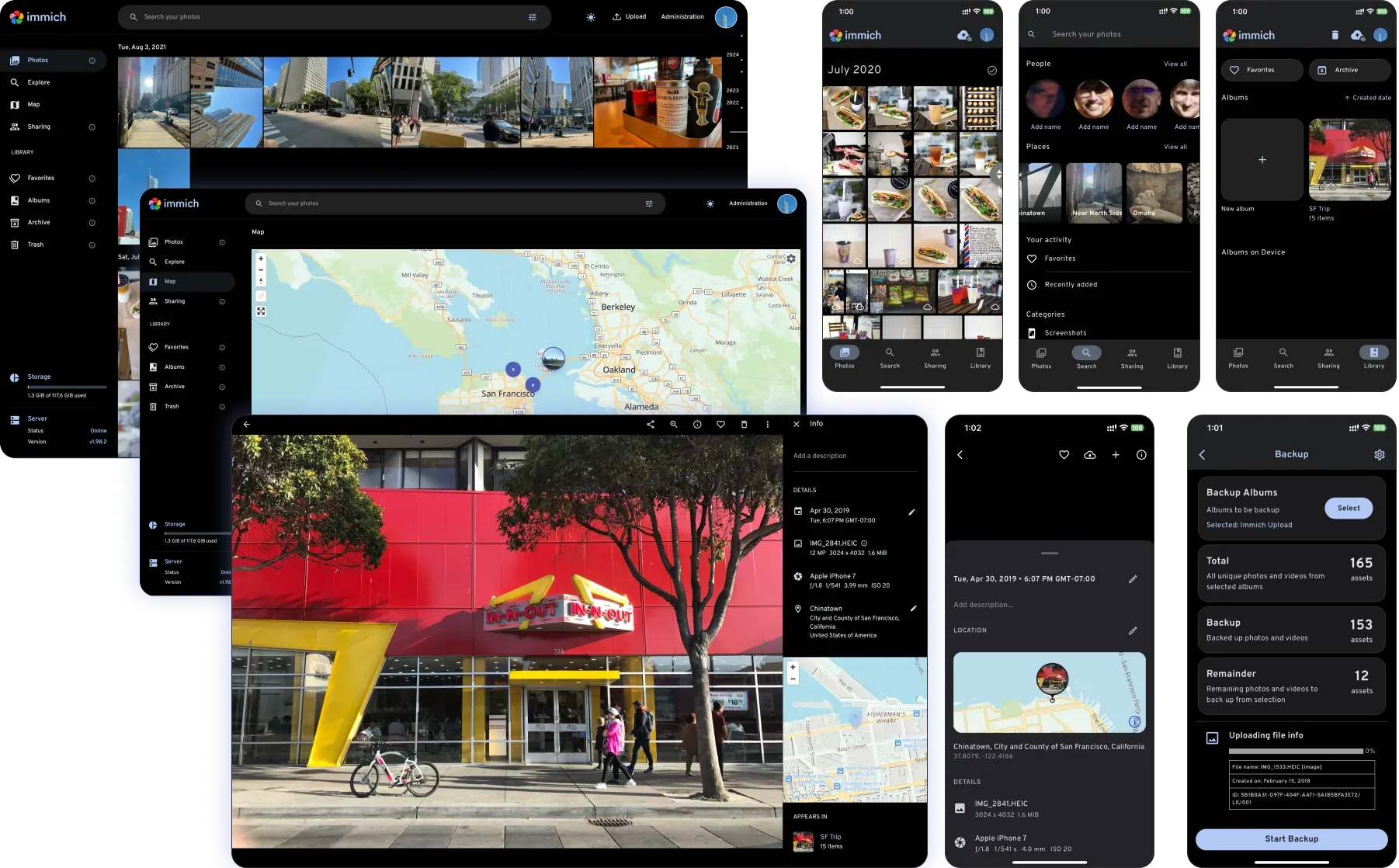
Image source: immich. Published by the project; the interface may vary by version.
Known features and client differences
The mobile feature list includes automatic backup when the app is opened, background backup, selective album backup, and offline support. Both clients list duplicate prevention, downloads to a local device, public sharing, archive and favorites, a read-only gallery, folder view, a global map, partner sharing, and memories.
The README also lists RAW support, EXIF and map metadata views, and search by metadata, objects, faces, and CLIP. Facial recognition and clustering are listed for mobile and web. OAuth, API keys, Live Photo or Motion Photo backup and playback, user-defined storage structures, and 360-degree image display also appear in the table.
Availability is not identical across clients. User administration, API keys, and tags are listed for the web client; tags are not listed for mobile, while offline support is not listed for web. Teams should check official documentation against the clients they intend to use rather than treating the table as a commitment for every environment.
The official release page identifies v3.2.2 as published on September 15, 2026. Its note describes a fix for face reassignment that skips faces belonging to other users. This indicates that updates can change specific behavior, so operators should review the relevant release notes and installation material before upgrading.
Limits and deployment considerations
Self-hosting does not create reliable backups by itself. The README explicitly recommends a 3-2-1 backup strategy for valuable photos and videos. Operators need to plan separate copies, storage locations, recovery steps, and restore verification. As a media collection grows, they should also reserve capacity and consider the transfer requirements of backups.
The README links to documentation, installation requirements, a demo, and a roadmap. The supplied sources do not confirm minimum hardware, a compatibility matrix, performance measurements, or a recommended deployment size, so those details should not be assumed. Public sharing, multi-user access, and face-related features mean that operators should establish account, access, and sharing rules for their own setting; this overview makes no security or suitability guarantee.
AGPL-3.0 is the license identified by the repository. Organizations planning to modify the project or provide a service to external users should check the license requirements for their actual use case. Immich is therefore better suited to users prepared to own storage, backups, upgrades, and access management.
Sources
Sources checked: 2026-09-27