

2026.10.07
NewsBlur: A Self-Hostable Reader for Personal News Workflows
NewsBlur combines RSS reading, filtering, search, tagging, and social sharing, with a Docker-based self-hosting path. Its broad service stack requires ongoing operational work.
What it does
NewsBlur is a personal news reader with social news features. It aggregates RSS content, provides an original-site view, and lets readers train the service by indicating what they like or dislike. That makes it relevant to people who want more than a chronological feed list: subscriptions can be filtered, searched, saved, tagged, and discussed in one workflow.
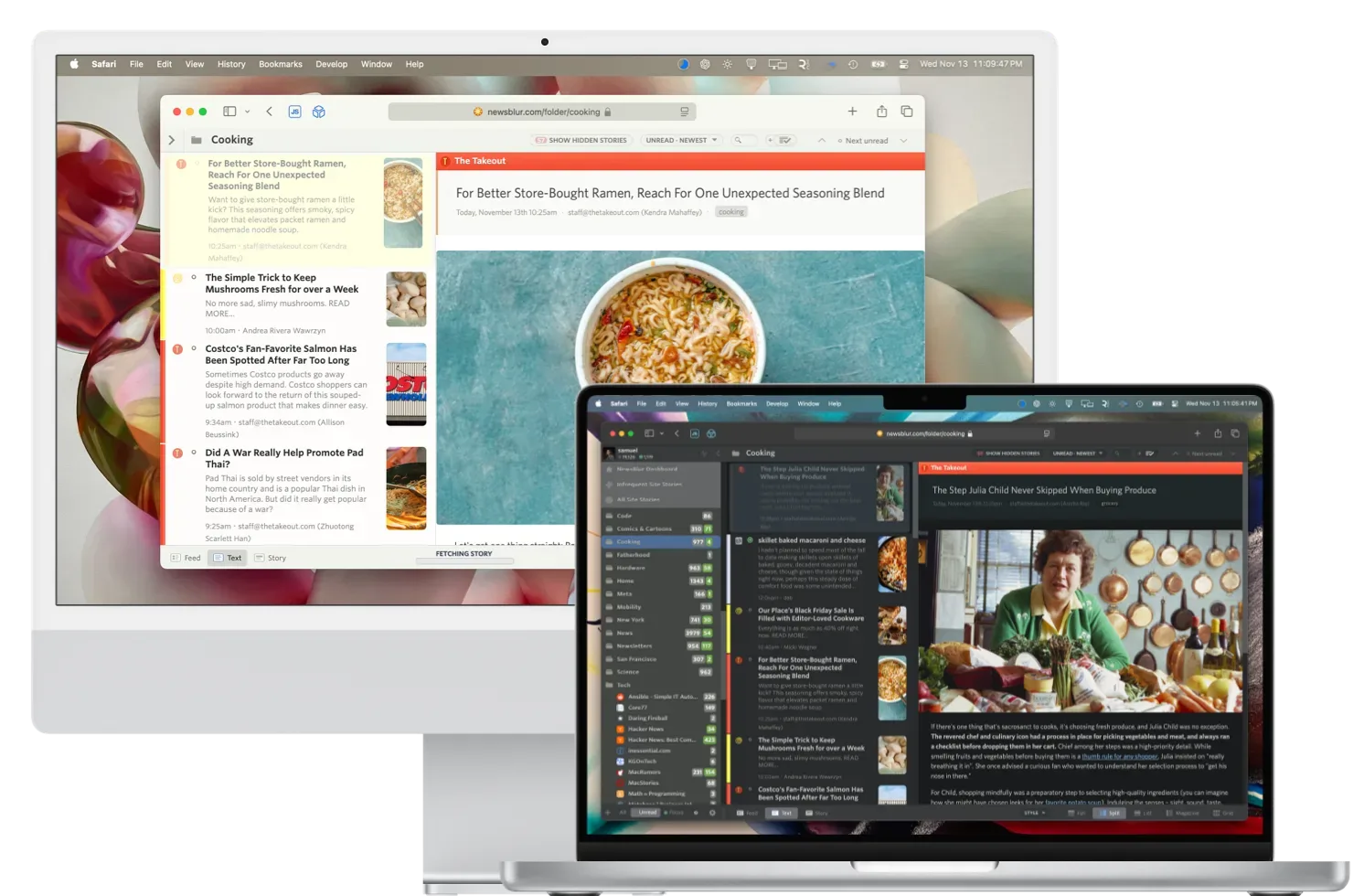
Image source: NewsBlur. Published by the project; the interface may vary by version.
Who it suits
The project is a candidate for individuals, households, or small teams that want control over their reading data. It may also suit users who need full-text search, saved stories, custom tags, and multiple reading layouts. The README documents native iOS, macOS, and Android apps, as well as support for several third-party clients. However, the practical compatibility of every client with a self-hosted instance should be validated before adoption.
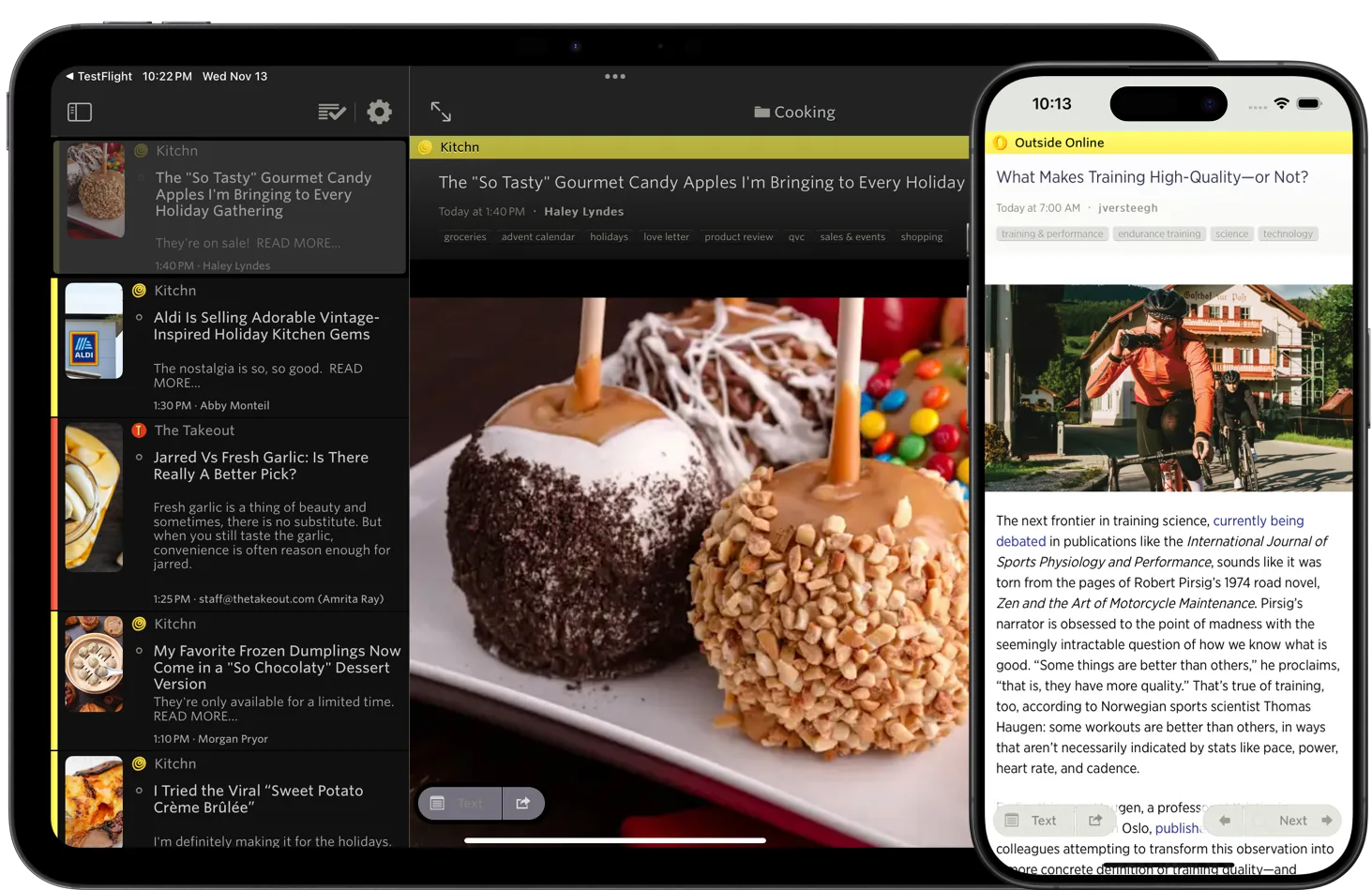
Image source: NewsBlur. Published by the project; the interface may vary by version.
Documented capabilities
Listed features include real-time RSS, original-site viewing, preference training, shared stories, full-text search, story tags, saved searches, email newsletters, change tracking, and Grid, List, Split, or Magazine layouts. Dark mode, YouTube channels, IFTTT integration, and an MCP Server are also documented. The MCP interface can read feeds and stories and perform actions such as marking items read, saving stories, subscribing to feeds, and training classifiers. For self-hosting, the README describes MCP as a separate container.
Deployment considerations
Self-hosting requires Docker and Docker Compose. The documented stack includes Django and Backbone.js, PostgreSQL for relational data, MongoDB for stories and read states, Redis for assembly and caching, Celery for background work, and Node.js services for text extraction and image processing. Elasticsearch is optional for search. This is therefore a multi-service deployment rather than a minimal single-container application.
The README exposes settings for the public URL, session cookie domain, account activation, signup CAPTCHA, story-retention periods, and an OpenAI API key. Email delivery, backups, social integrations, and other optional capabilities may require additional credentials or external services. The supplied sources do not state minimum hardware, recommended scale, or performance limits, so those points remain unconfirmed.
Limits before adoption
Operators must plan for upgrades, backups, domains, TLS, logs, and recovery. Although Elasticsearch is optional, teams that depend on full-text search should validate that part of the deployment early. The hosted service’s site limit and premium plans should not be treated as a statement about self-hosting cost or capacity. The repository is marked MIT-licensed and not archived. The official v0.2.2 release documents fixes involving CLI/MCP caching, structured errors, folder read handling, and resource serialization; operators should review release notes when planning updates.
Sources
Sources checked: 2026-10-07