

2026.10.22
Outline: A Self-Hostable Knowledge Base for Teams
Outline is an open-source team knowledge base focused on collaborative editing, search, permissions, integrations, and self-hosted deployment.
What it is for
Outline is designed for teams that need a shared home for internal documentation, procedures, and institutional knowledge. Its README describes a collaborative knowledge base built with React and Node.js, with Markdown compatibility. It can help organizations turn information scattered across chat, personal documents, and repeated questions into a searchable workspace.
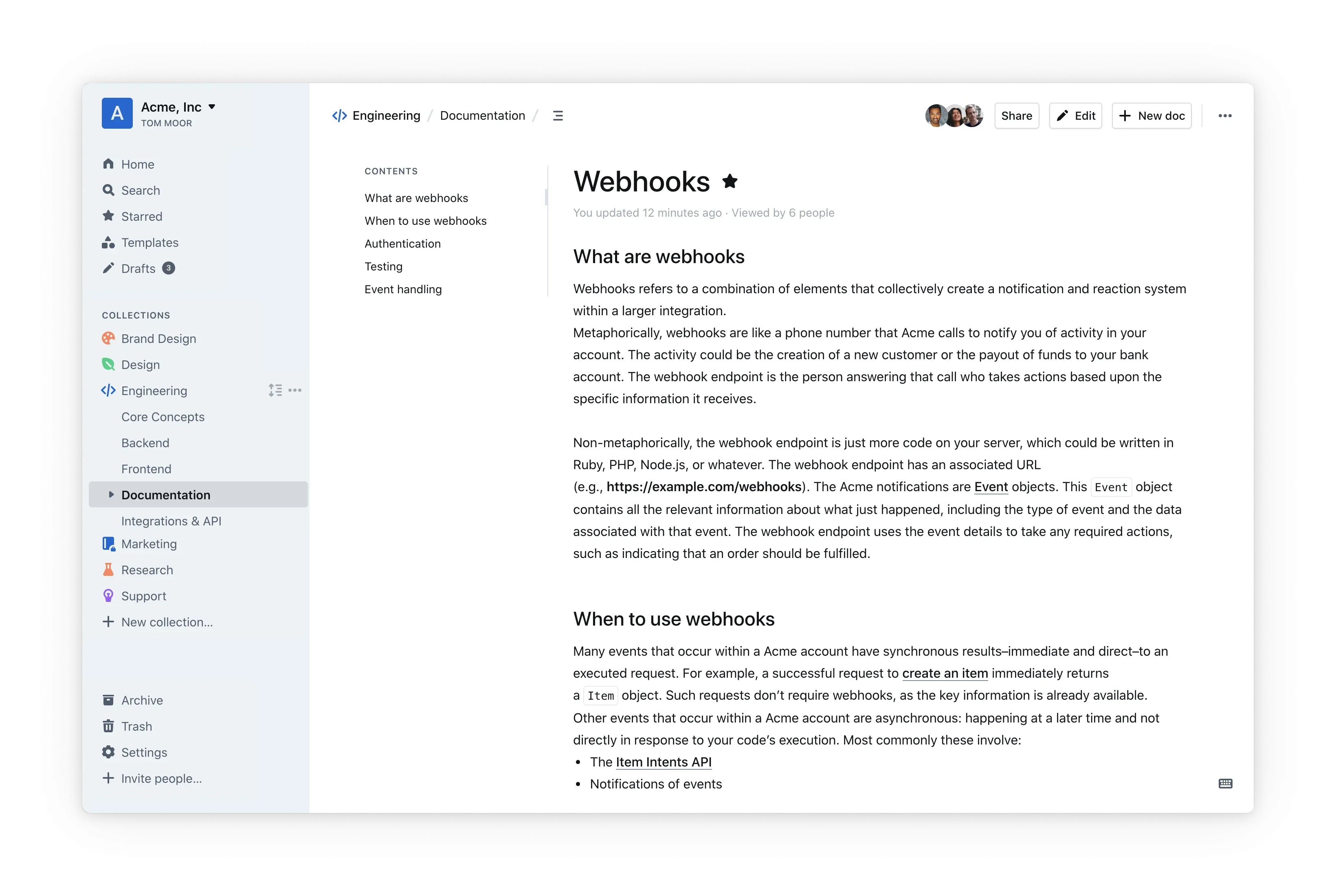
Image source: outline. Published by the project; the interface may vary by version.
Known capabilities
The official website lists realtime multiplayer collaboration, comments and threads, search, permissions and groups, guest users, public sharing, and an open API. It also promotes Slack integration for searching and sharing documents and receiving update notifications from chat. The editor includes Markdown support, slash commands, and interactive embeds. The site also states that Outline supports RTL and includes translations for 20 languages, including Chinese.
The website describes a built-in MCP server that can connect Claude, ChatGPT, Cursor, and other AI assistants to search, read, and edit documents. Teams considering this capability should still validate the actual permission boundaries, deployment model, and operational fit against the official documentation before enabling it in a production workspace.
The v1.11.0 release notes record OKF import, drag handles for root-level blocks, reasons for archiving or deleting documents and collections, and skills exposed over MCP. These changes point to continued work around migration, editing, and AI connectivity. Adoption plans should verify the behavior of the specific release being deployed.
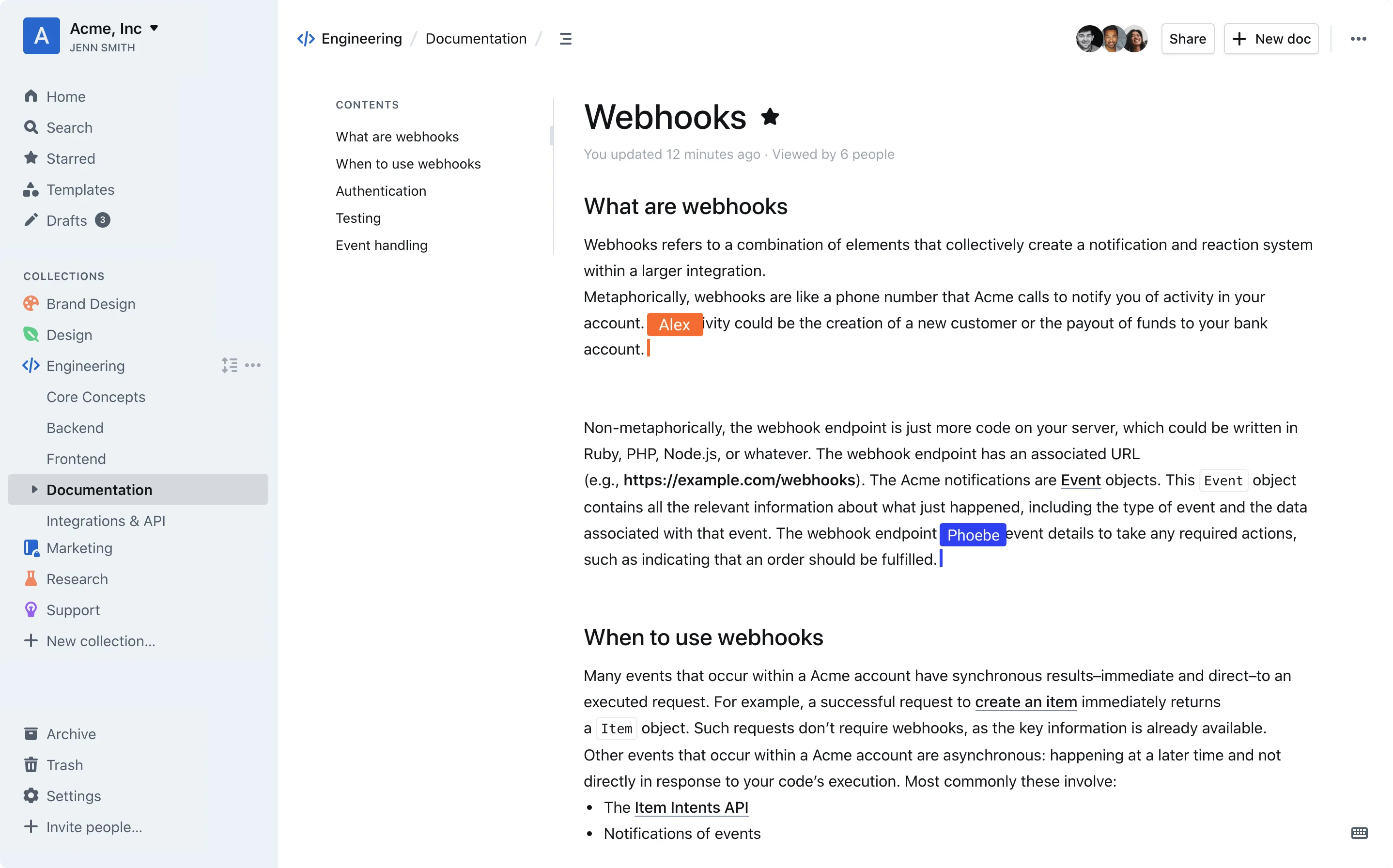
Image source: outline. Published by the project; the interface may vary by version.
Self-hosting considerations
The README distinguishes the hosted service from running your own copy: users who simply want to use Outline do not need to run the source code, while production self-hosting should follow the official hosting documentation. The repository references container images, but the supplied sources do not confirm a minimum hardware profile, deployment topology, external service requirements, or backup design. Before launch, confirm the database, file storage, identity provider, email delivery, reverse proxy, upgrade process, and recovery procedure. Test migrations and backup restoration in a non-production environment.
Licensing also deserves a separate review. The README identifies the project as BSL 1.1 licensed, while the GitHub API metadata reports an SPDX status of NOASSERTION. This does not establish a contradiction; it means the repository license file should be read directly. Organizations should assess whether self-hosting, modification, redistribution, and commercial use fit their intended model.
Who it suits
Outline is a good candidate for technical teams that want a team knowledge base, value realtime collaboration, and are prepared to operate authentication, storage, upgrades, and recovery. The hosted option may reduce operational work, while self-hosting deserves consideration when data must remain on an organization’s infrastructure. In either case, do not infer real-world performance or security solely from product descriptions. Validate the permission model, representative documents, user load, integrations, and recovery objectives before committing.
Sources
Sources checked: 2026-10-22