

2026.09.25
ProjectSend: A Self-Hosted File Portal for Client Delivery
ProjectSend is a GPL-2.0 self-hosted application for sharing files with clients through private areas, permissions, notifications, audit history, APIs, and multiple storage backends.
What it is for
ProjectSend is aimed at teams that need to deliver files to clients, partners, or other external users. Administrators upload files to their own server and choose which clients or client groups can access them. Each client signs in to a private area and sees only the files shared with them. This makes it relevant to design studios, consultants, agencies, education projects, and small organizations that need client-specific file spaces. The repository describes it as a self-hosted file-delivery application and identifies the license as GPL-2.0; this article makes no independent claim about its security or performance.
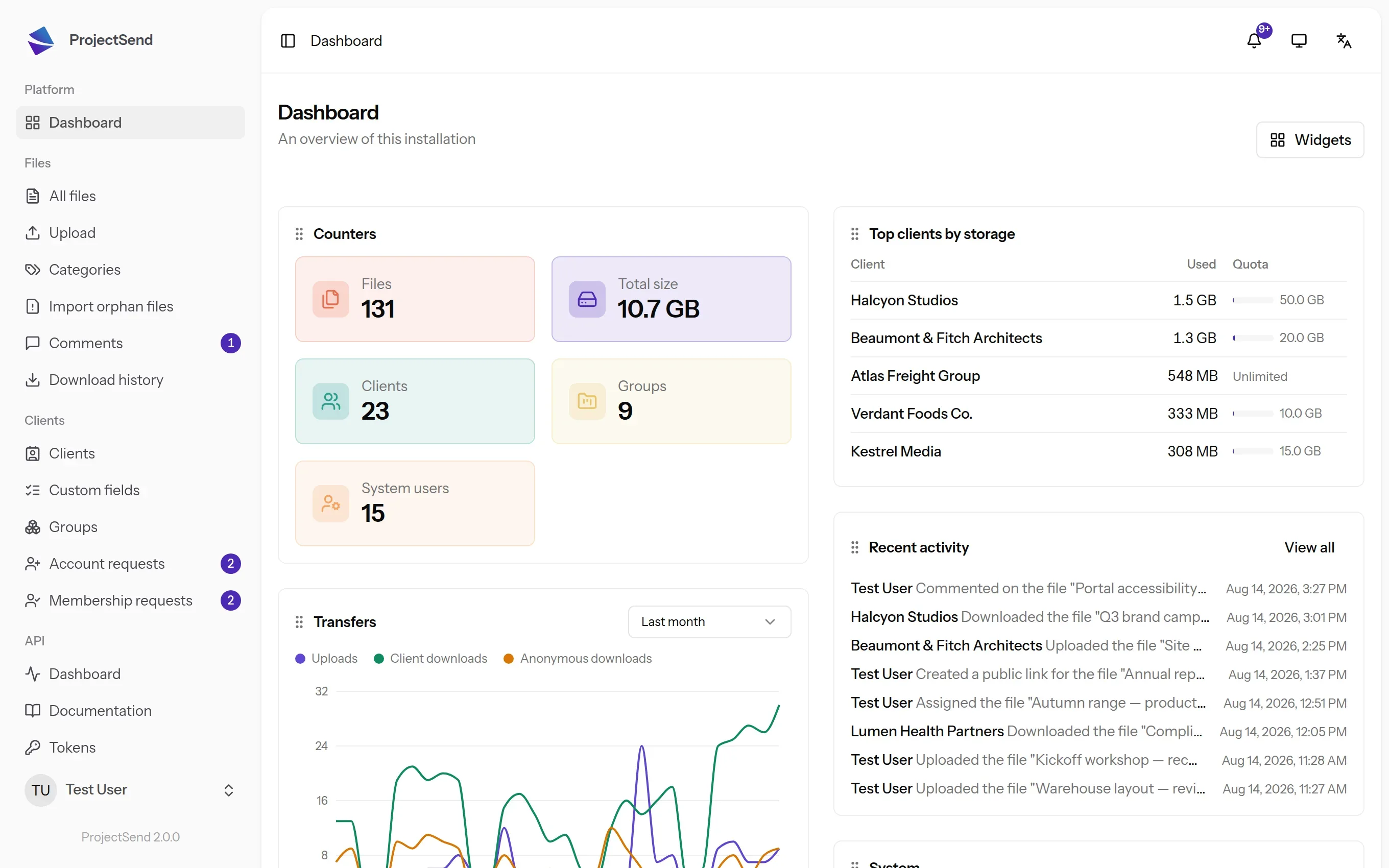
Image source: projectsend. Published by the project; the interface may vary by version.
Known capabilities
Clients can search, filter, and sort files, then download one file, several files as a ZIP, or an entire folder. Email-based sign-in supports optional two-factor authentication. Comments and email notifications for new files can keep questions and delivery updates near the relevant content. For administrators, resumable uploads are available, while folders, categories, and client groups help organize deliveries. Per-client quotas and custom fields are also listed.
A file can be shared with one client, a group, or publicly, with an expiry date or download limit. Thumbnails and previews, activity logs, and download history support routine delivery and tracking. Internal roles and permissions can separate uploading from administration. The README lists LDAP, social sign-in, and ordinary email-and-password authentication.
ProjectSend includes a REST API, scoped tokens, and generated OpenAPI documentation. It also lists 16 languages, themes for client pages and outgoing email, and account-erasure controls. Storage options include local disk, S3-compatible storage, and Google Cloud Storage.
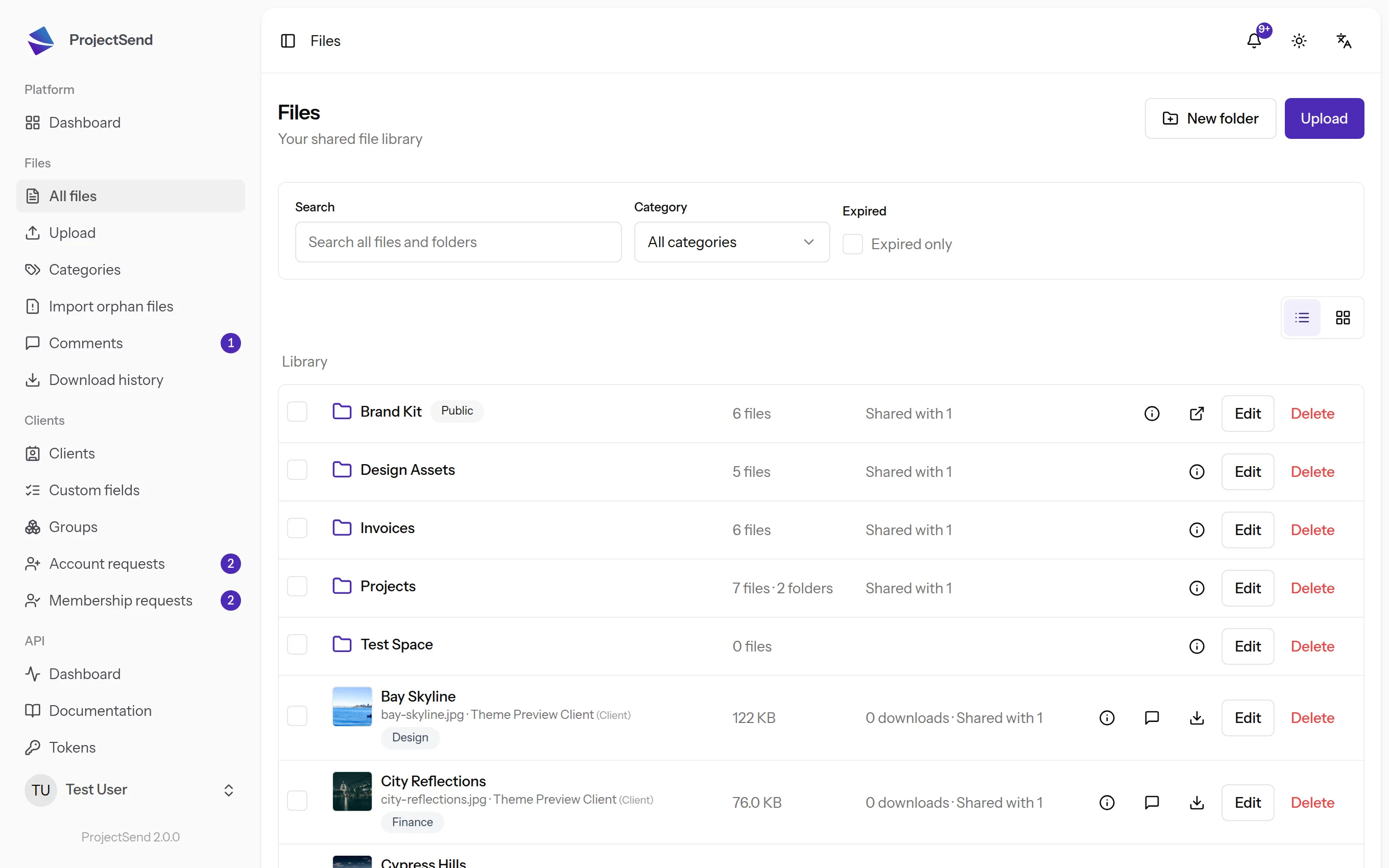
Image source: projectsend. Published by the project; the interface may vary by version.
Deployment considerations and limits
Self-hosting means taking responsibility for the server, domain, HTTPS, email delivery, backups, upgrades, and access control. The README recommends Docker and says the published image includes dependencies and the compiled frontend. For installations without Docker, the project provides a release-archive path documented in its installation materials. Before production use, verify where the database and uploads persist, how they are moved, and how backups are restored; a running container alone does not demonstrate that data is protected.
Choosing self-hosting also does not automatically satisfy privacy, retention, or industry-compliance obligations. Review requirements for logs, client accounts, notifications, and object-storage permissions before selecting authentication and storage. Migration from legacy ProjectSend deserves separate planning: the README calls the new generation a rebuild, so migration is an import rather than an in-place upgrade. Confirm the data scope and rollback procedure first.
The 2.5.0 release notes add virus scanning, quarantine handling, configurable behavior when scanning is unavailable, client-account expiry dates, and additional library filters. Whether those features fit your workflow depends on the scanner, network, and data classification. The supplied sources do not establish minimum hardware requirements, a compatibility matrix, or performance figures, so those points remain to be verified.
Who should consider it
ProjectSend is worth evaluating if you want control over storage location, client-specific access, and delivery history. If your team does not want to operate a PHP application, database, mail system, and backup process, the official hosted version or another managed option may better match its operational capacity. The supplied sources do not provide hosted pricing or detailed service commitments.
Sources
Sources checked: 2026-09-25