

2026.10.07
Nextcloud Server: Organizing Files and Collaboration on Your Infrastructure
Nextcloud Server is for individuals, teams, and organizations that want to choose where their files and collaboration data are hosted. Before adoption, define the required apps and prepare for updates, backups, and ongoing operations.
What the project is for
Nextcloud Server is an open-source, self-hosted content collaboration project. Its README says users can store, synchronize, and share files, contacts, calendars, and other data on a server of their choosing. It is therefore relevant to users who do not want this information handled entirely by one external service and who want to decide where and how the service is deployed.
Files are not its only stated use case. The README describes an app-based way to extend the platform and names Calendar, Contacts, Mail, and Video Chat. The official site presents Files, Talk, Groupware, Office, Assistant, and Flow as products within Nextcloud Hub. It describes Files as a self-hosted storage and sync platform with web, desktop, and mobile interfaces. Together, these sources show that Nextcloud can be assembled into a broader collaboration environment rather than used only as file storage.
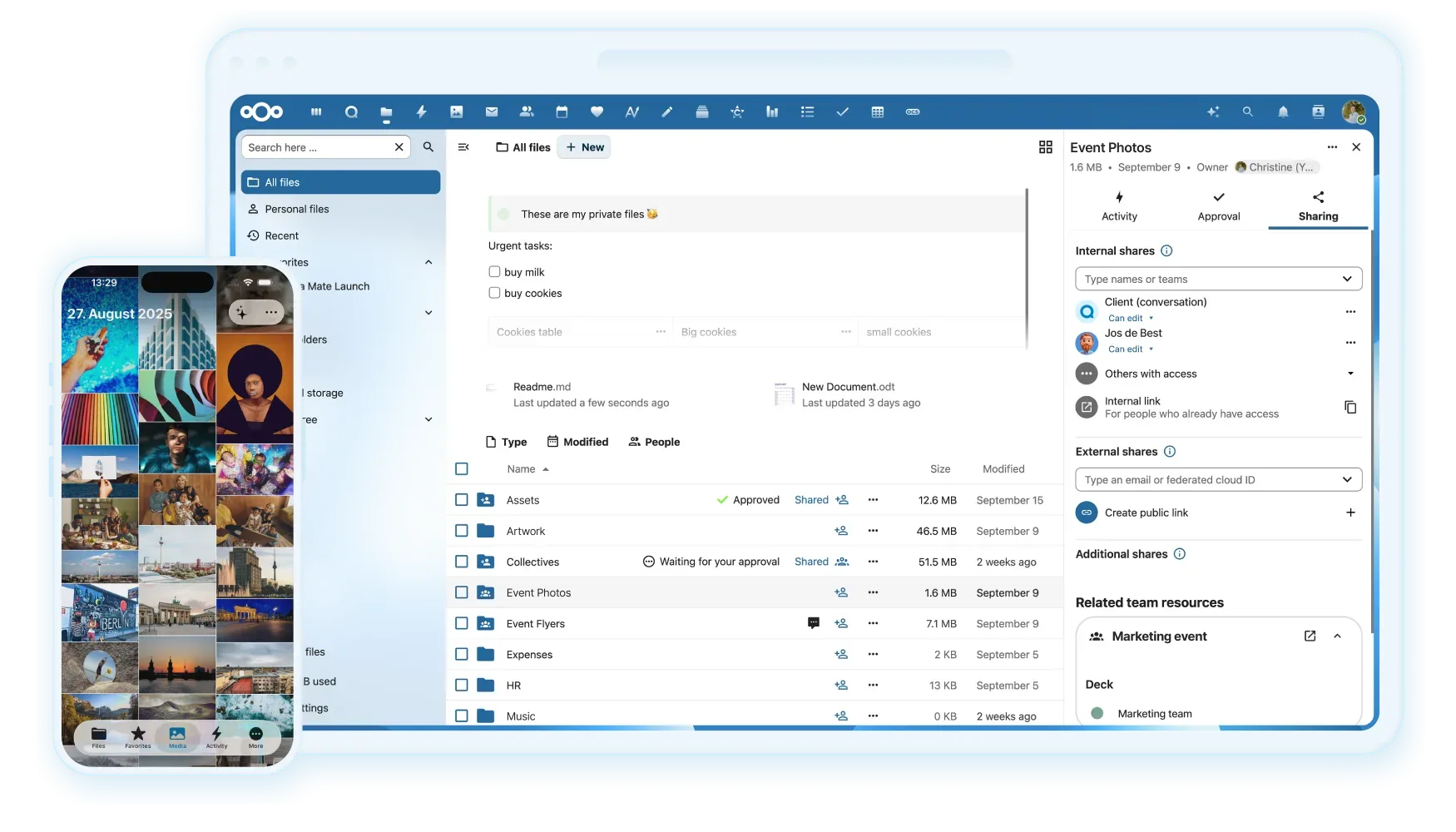
Image source: server. Published by the project; the interface may vary by version.
Who it may suit
Individuals and households may focus on bringing files, contacts, and calendars together. Small teams can assess whether synchronization, sharing, and the apps they actually need can form an internal collaboration space. Schools, public-sector bodies, businesses, and service providers may also find self-hosting relevant when they want to select their own infrastructure and fit collaboration services into an existing environment.
Self-hosting does not require every user to build an installation from scratch. The README also points to self-installation, preinstalled devices, providers, and hosted services. The key decision is the division of responsibility. A self-managed deployment normally places platform operation with the deploying team. With a provider or hosted offering, buyers should establish support scope, data-handling arrangements, upgrade practices, and migration options before committing. The supplied material does not define a common service level for these alternatives.
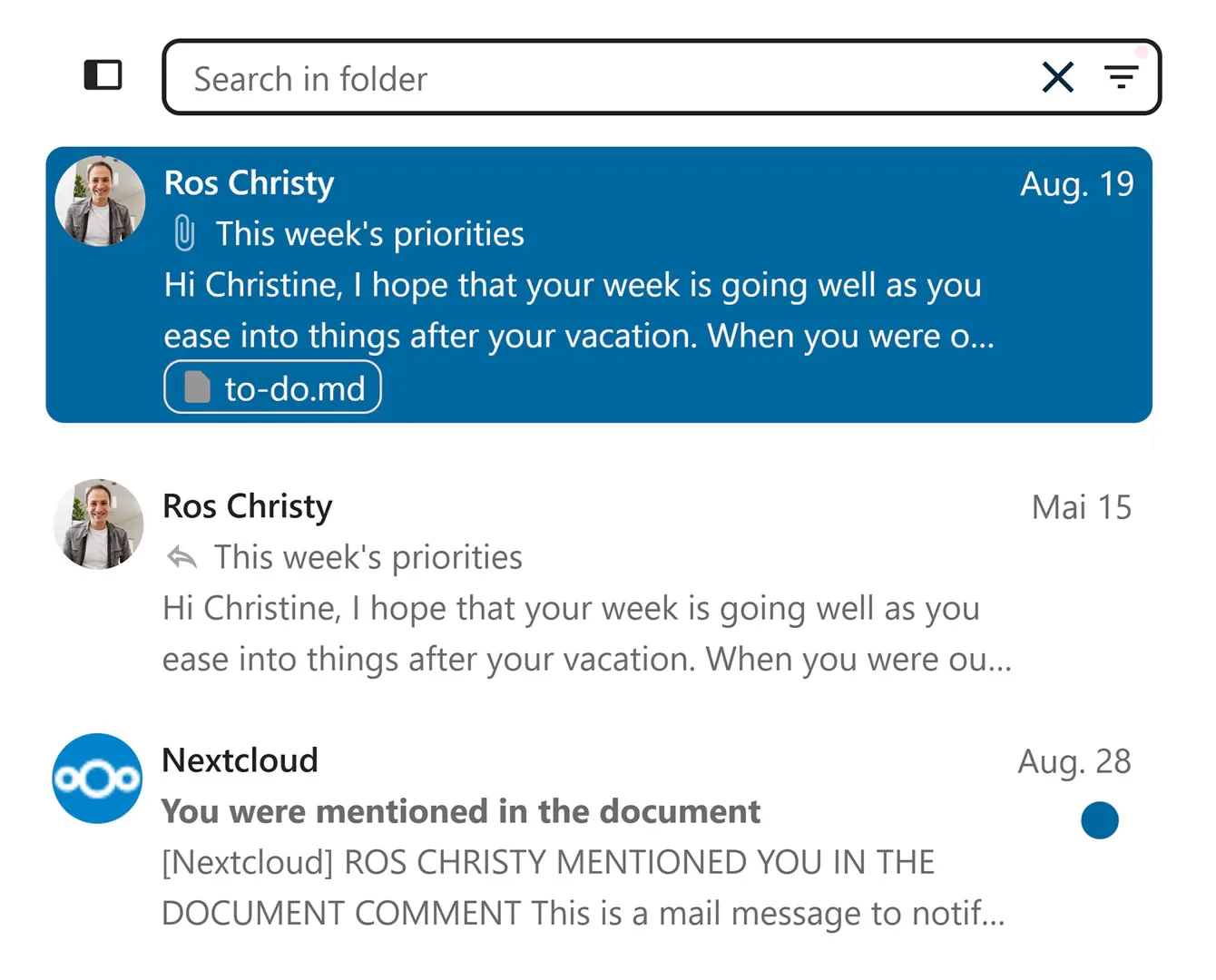
Image source: server. Published by the project; the interface may vary by version.
Deployment considerations and limits
Define the necessary apps and workflows before deployment. Extensibility creates choices, but it also means ongoing attention to version alignment, update planning, and changes affecting business data. Before production use, validate essential workflows such as account access, sharing, mobile use, and whether backup and recovery procedures meet local requirements. The supplied sources do not establish universal minimum hardware, performance guarantees, or capacity guidance. They should not be used to assume that a particular device or scale will fit every deployment.
The choice of code source also matters. The README explicitly says that master branch checkouts should never be used on production systems. It further notes that development checkouts require initialization of third-party submodules, and that some apps included by default in regular releases may require manual installation on master. Production planning should be based on formal releases and the relevant project documentation, rather than on a development branch. The supplied release page confirms v35.0.1, but does not provide a complete compatibility matrix or a statement of upgrade impact.
Repository metadata identifies the license as AGPL-3.0. Organizations planning to modify, distribute, or integrate the software into another service should assess obligations for their actual use case instead of drawing conclusions from the license name alone.
Bottom line
Nextcloud Server suits users who value control over deployment location and are ready to operate a collaboration platform. Its file features and app extension model offer flexibility, while storage, updates, app selection, recovery procedures, and operational responsibility must be addressed before adoption. If minimizing maintenance is the priority, compare the work assigned to self-managed, provider, and hosted options first.
Sources
Sources checked: 2026-10-07