

2026.09.19
Apache Airflow: Code-Defined Scheduling for Data and Automation Workflows
Apache Airflow is suited to code-defined orchestration of relatively stable data, machine-learning, and automation workflows. It is not a streaming system, and production adoption requires planning for task idempotency, external data services, databases, workers, and platform support.
What it is for
Apache Airflow is a platform for programmatically authoring, scheduling, and monitoring workflows. Teams define tasks and dependencies as code, while the scheduler coordinates execution across workers. Its interface helps users visualize running pipelines, monitor progress, and troubleshoot failures. Code-defined workflows can also fit version control, testing, and collaborative engineering practices.
Airflow is particularly suited to workflows whose structure is mostly static and changes slowly. Typical uses include scheduled data integration, ETL or ELT, reporting preparation, and machine-learning orchestration such as training, retraining, evaluation, and deployment. The project README also describes coordination of agentic and large-language-model workloads, including data preparation, tool calls, model invocation, and evaluation. Airflow coordinates these steps; it is not itself the agent.
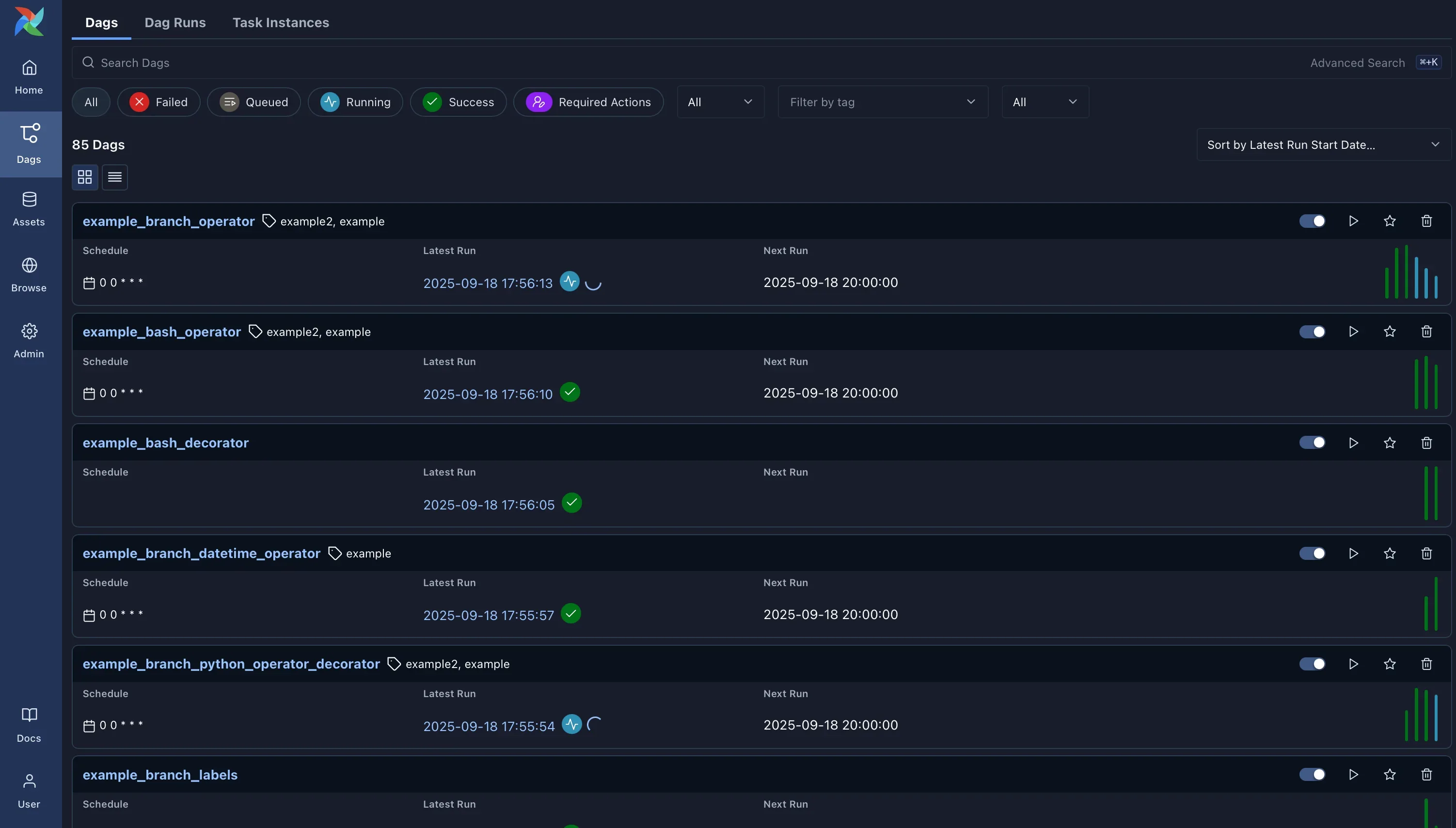
Image source: airflow. Published by the project; the interface may vary by version.
Features and intended users
DAGs can be generated and parameterized in code, with Jinja available for customization. The framework includes operators and can be extended for additional integrations. The scheduler follows declared dependencies, while command-line tools and the user interface support operational work, visualization, and troubleshooting.
This makes Airflow a candidate for data-engineering, platform-engineering, and machine-learning teams that are prepared to maintain workflow code as well as scheduling components, workers, and connected services. Engineers moving from ad hoc scripts to observable, retryable, collaborative workflows may also find it useful. The trade-off is that Airflow is a platform with operational responsibilities, not merely a script launcher.
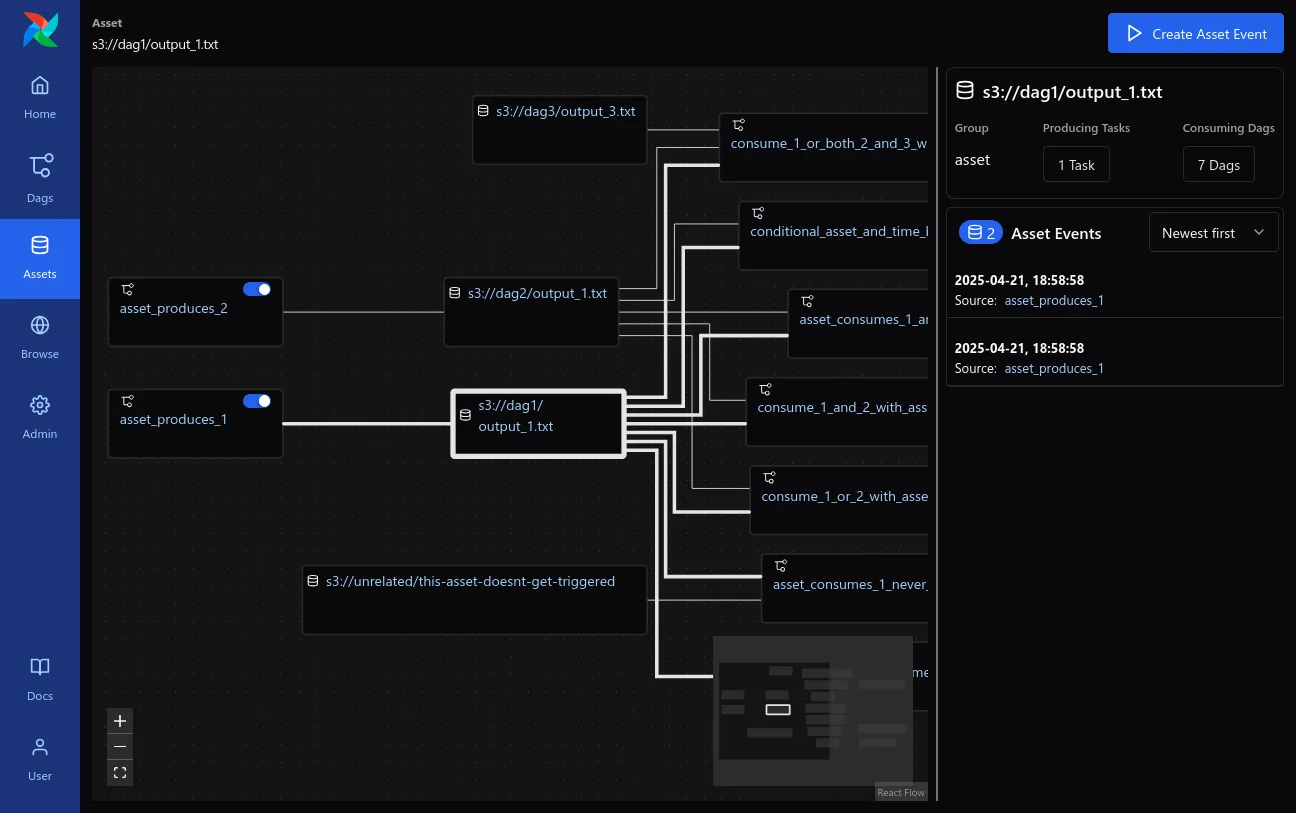
Image source: airflow. Published by the project; the interface may vary by version.
Limitations to understand
Airflow is not a streaming solution. It can pull data from streams in batches, but it should not be treated as a continuous, low-latency stream-processing engine. For high-volume or data-intensive work, the project recommends delegating processing to specialized external services rather than passing large quantities of data between tasks. Tasks should ideally be idempotent, and XCom is intended for metadata rather than large datasets.
Workflows that change structure constantly may require additional design to keep DAG maintenance and scheduling behavior understandable. For deployment, the README says production execution should use Linux-based distributions. Windows can be used through WSL2 or Linux containers, which should not be interpreted as native Windows production support. The README lists tested ranges for AMD64/ARM64, Python, Kubernetes, PostgreSQL, and MySQL, but the target version and provider documentation still need to be checked for a particular installation. SQLite is suitable for tests and local development but is explicitly not recommended for production.
Deployment and upgrade considerations
Before adoption, decide how the metadata database, task execution model, worker scaling, credentials, and logs will be managed. Choose among local, container, or Kubernetes-based deployment only after matching the operating model to the workload. The authoring experience is only one part of the system; the scheduler, database, workers, and external task services also carry operational responsibility.
The repository metadata identifies Apache License 2.0 and shows the repository as active rather than archived. The 3.3.2 release notes document changes to backfill authorization behavior and to the precedence of explicit credentials over a session cookie. During upgrades, review the relevant release notes and test API clients, authentication flows, and audit behavior instead of assuming a drop-in replacement.
Sources
Sources checked: 2026-09-19